-
Case Title & Citation
R. v. Secretary of State for the Home Department, ex parte Doody, [1994] 1 AC 531 (UK House of Lords). -
Decision Summary (Neutral Overview)
This case concerned life-sentenced prisoners in England challenging the Home Secretary’s practice of setting minimum terms (tariffs) without giving them reasons or an opportunity to make representations.
The House of Lords held:
-
While Parliament did not expressly require reasons, fairness in these circumstances did.
-
Prisoners should be informed of the judicially recommended tariff and be given an opportunity to make representations before the Home Secretary fixed a different term.
-
Procedural fairness can require reasons where decisions have grave consequences for individuals.
-
Historical & Legal Context
Doody sits within the development of modern administrative law in the UK, where courts expanded the content of “natural justice” and procedural fairness. It shows that even where statutes are silent, fairness may demand disclosure and participation. -
Key Legal Principles Identified in the Case
-
Procedural fairness is flexible, but its content depends on context.
-
Where state decisions deeply affect rights/liberties, fairness may require:
-
Reasons, and
-
A chance to respond.
-
-
Ministers exercising broad discretion are still subject to fairness duties.
-
Implications for Haldimand, Loyalist, and Mohawk Questions
-
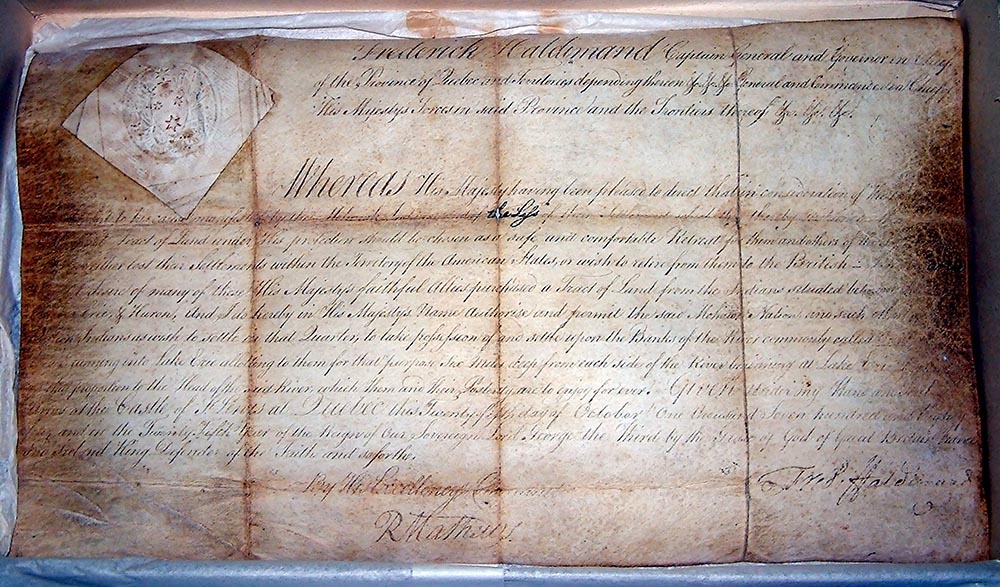
When Canada, Ontario, or municipalities make decisions that reshape land, jurisdiction, and economic life on Haldimand lands, Doody supports the argument that “business as usual” without reasons is unlawful.
-
It undercuts the idea that governments can silently treat Haldimand as ordinary Crown land without explaining how they reconcile that with the written instruments.
-
Points of Interest to Mohawk of Grand River Posterity
-
Doody backs the demand that governments give clear, recorded reasons when they claim jurisdiction over Haldimand territory or refuse to recognize Mohawk Loyalist posterity.
-
If they cannot provide coherent reasons that square with Haldimand, Dorchester, and Simcoe, the absence itself is evidence of legal and constitutional failure.
-
Unresolved Questions / Future Research Directions
-
Could a Canadian court require governments to issue reasoned decisions specifically addressing Haldimand when they:
-
Approve developments,
-
Enforce taxes, or
-
Refuse hereditary registries?
-
-
How far can procedural fairness be pushed where the “decision” is a century-long pattern rather than a single administrative act?
-
Sources
-
R. v. Secretary of State for the Home Department, ex parte Doody, [1994] 1 AC 531.
-
UK administrative law commentary on fairness and reasons.
Leave a Reply