
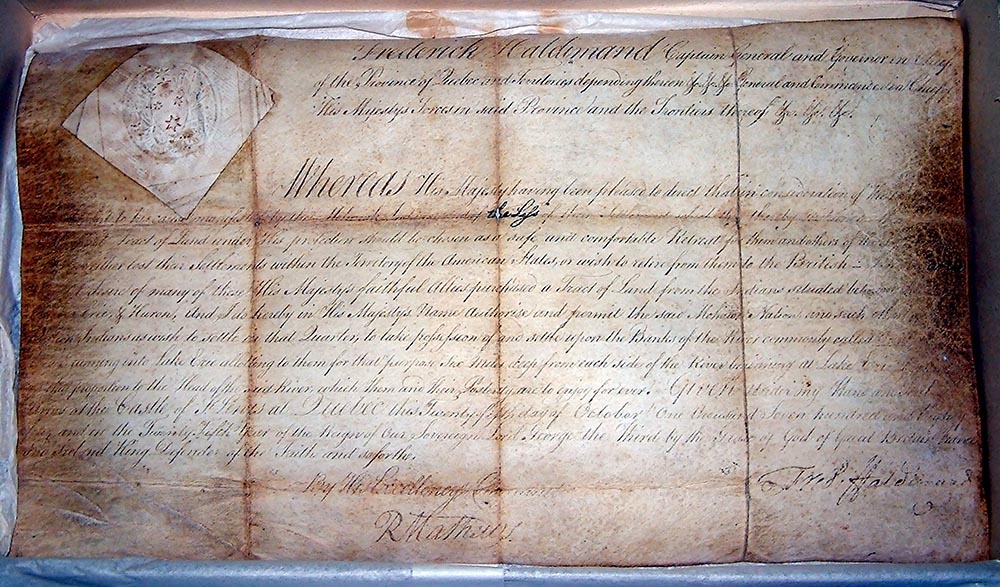
Don Hopton et al. v. Wayne Pamajewon et al.

Home » Case Law » Don Hopton et al. v. Wayne Pamajewon et al.
  1. Case Title & Citation
    Don Hopton et al. v. Wayne Pamajewon et al., Ontario Court of Appeal, 1993 (exact citation varies by report).

  2. Decision Summary (Neutral Overview)
    This case involved disputes over roads and authority on reserve lands in Ontario. Non-Indigenous parties claimed rights of access based on long-standing use and provincial road concepts. Indigenous parties disputed the existence and scope of public rights-of-way.

The Ontario Court of Appeal considered:

  • Whether common law doctrines like dedication (land becoming public road through use) applied the same way on reserve lands.

  • The interaction between federal Indian Act control, band authority, and provincial statutes.

The Court’s reasoning highlighted that ordinary provincial assumptions about roads do not automatically override federal and Indigenous interests.

  1. Historical & Legal Context
    Pamajewon arose in the broader context of conflicts over control of reserve lands and infrastructure. It sits alongside other cases exploring how far provincial regimes can extend into federally regulated or Indigenous-held land.

  2. Key Legal Principles Identified in the Case

  • Common law doctrines like dedication must be considered in light of the special status of reserve lands.

  • Provincial road concepts do not automatically apply when underlying title and control rest with the Crown in trust for Indigenous peoples.

  1. Implications for Haldimand, Loyalist, and Mohawk Questions

  • The case bolsters the argument that roads on Haldimand lands are not simply “public highways” because municipalities have used them that way.

  • It undercuts claims that long-term public use equals legal dedication where the underlying land is part of a Crown-recognized Indigenous refuge.

  1. Points of Interest to Mohawk of Grand River Posterity

  • Pamajewon helps frame roads on the Grand River as contested spaces rather than neutral infrastructure.

  • It supports viewing many existing roads as potential trespasses or unauthorized occupations, unless specific, lawful grants or surrenders can be proven.

  1. Unresolved Questions / Future Research Directions

  • How would an Ontario court treat Haldimand lands—purchased for Mohawk refuge but not standard “reserves”—in applying Pamajewon’s logic?

  • Could Pamajewon-style arguments be used to demand decommissioning, compensation, or shared jurisdiction over key transport corridors?

  1. Sources

  • Don Hopton et al. v. Wayne Pamajewon et al., Ont. C.A. decision.

  • Commentary on dedication, reserve lands, and public rights-of-way.

355 words

Sign up to the Newsletter!
Get the latest articles and news delivered to your mailbox.

Leave a Reply

Your email address will not be published. Required fields are marked *

Categories


About Benjamin Doolittle U.E.

listen to BLOODLINE

“Bloodline” follows the Haldimand Proclamation from its original promise to the present fight to have it honoured. The track moves through Crown grants, broken commitments, and the legal and political road back to enforcement, asking listeners to hear the Proclamation not as a relic of the past, but as a living obligation that still binds the Crown to the Mohawk Nation of Grand River.

Artist: One Way Current
Writer: Benjamin Doolittle UE
Producer: One Way Current
Publisher: Corn Press Publications
Affiliation: Six Miles Deep / Mohawk Nation of Grand River

WHITE PAPER

CROWN PLUS

Crown Plus is an initiative of the Mohawk University, dedicated to restoring truth, lawful continuity, and honour in the interpretation and application of the Haldimand Proclamation of 1784 — the foundational covenant between the Mohawk Nation and the British Crown.

This paper is divided into three parts, each exploring a distinct dimension of the Haldimand covenant: its legal origins, its modern violations, and the path toward lawful restoration. Together, they form the living record of a truth that has been long buried beneath colonial misinterpretation.Crown Plus stands for the principle that the Mohawk Nation is not a subject of the Crown, but a co-sovereign pillar upon which the Canadian state itself rests.

The phrase “Crown Plus” reclaims the language of Canada’s political history — a response to the White Paper (1969) and Red Paper (1970) — and reframes it in the Mohawk context. Where others spoke of “citizens plus,” we assert “Crown Plus”: the indivisible bond of alliance, honour, and hereditary right between the Mohawk and the Crown.

Part I — The Legal Foundations and Historical Continuity

Explores the origins of the Haldimand Proclamation, the Dorchester correction, the Mohawk–Crown alliance since Queen Anne, and the constitutional distinctiveness of the Mohawk Loyalist posterity.

Part II — Modern Violations, Fiduciary Duties, and Institutional Responsibility

Documents the breach of fiduciary duty by Crown agents, the propagation of false land acknowledgements, and the complicity of academic, corporate, and judicial institutions in sustaining unlawful occupation.

Part III — Framework for Restoration, Recommendations, and the Path Forward

Outlines a ten-year restoration plan, proposes the Mohawk Posterity Registry and Royal Commission of Continuity, and reaffirms the spiritual and legal covenant through the Crown Plus Initiative.