
-
Case Title & Citation
Kirk v. Morris, 40 Ala. 225 (Supreme Court of Alabama, 1866). -
Decision Summary (Neutral Overview)
Kirk v. Morris concerned the interpretation of a deed or will that used the phrase “such other” persons in connection with property rights. The court had to decide who counted within that phrase.
The Court held:
-
“Such other” referred to persons outside the main defined group—a “stranger” category.
-
The wording did not create a vague, collective entitlement but pointed to additional, identifiable individuals.
-
Historical & Legal Context
Though an American case, Kirk has been cited in discussions of how courts interpret terms like “such other” and “strangers” in property instruments. -
Key Legal Principles Identified in the Case
-
Phrases like “such other” are interpreted by context, often meaning additional persons who are not part of the core group but are somehow linked.
-
Courts try to give such language a concrete, not purely symbolic, meaning.
-
Implications for Haldimand, Loyalist, and Mohawk Questions
-
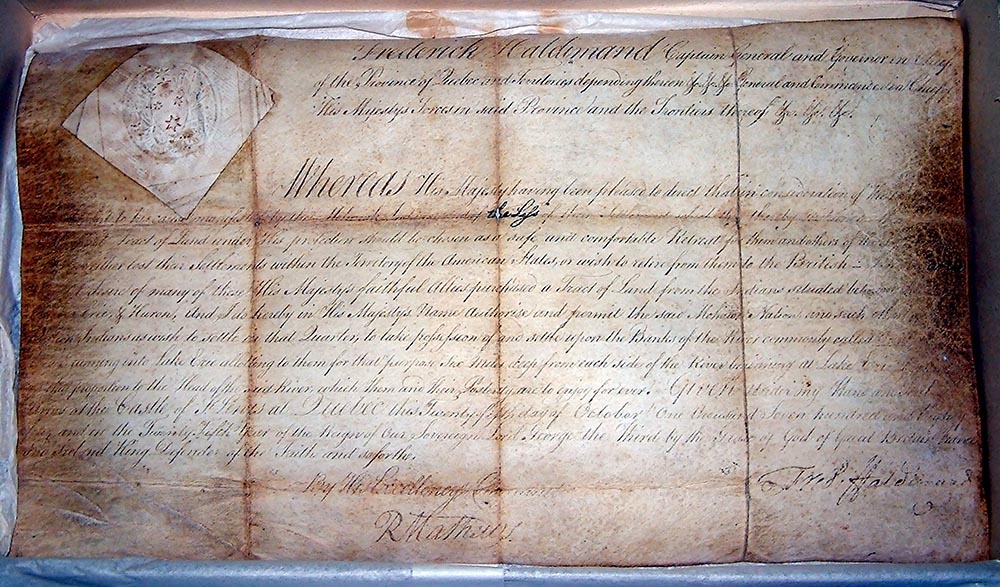
The Haldimand Proclamation grants land to “the Mohawk Nation and such others of the Six Nations Indians as wish to settle in their quarter.”
-
Kirk supports reading “such others” as distinct individuals—allies retiring into Mohawk territory—rather than creating a new, equal collective owner.
-
Points of Interest to Mohawk of Grand River Posterity
-
This interpretation reinforces a Mohawk-centred reading of Haldimand: Mohawk Loyalists are the primary beneficiaries, and “such others” are admitted into their quarter under Mohawk leadership, not as co-grantors.
-
It undercuts later attempts to treat “Six Nations” as a single corporate landowner replacing the original Mohawk-focused grant.
-
Unresolved Questions / Future Research Directions
-
How would a modern Canadian court treat Kirk as persuasive authority in interpreting “such others” in Haldimand?
-
Could this reasoning be used to differentiate legal standing between Mohawk Loyalist posterity and other residents or claimants on the tract?
-
Sources
-
Kirk v. Morris, 40 Ala. 225 (1866).
-
Property law commentary on interpretation of “such other” and similar phrases.
Leave a Reply