
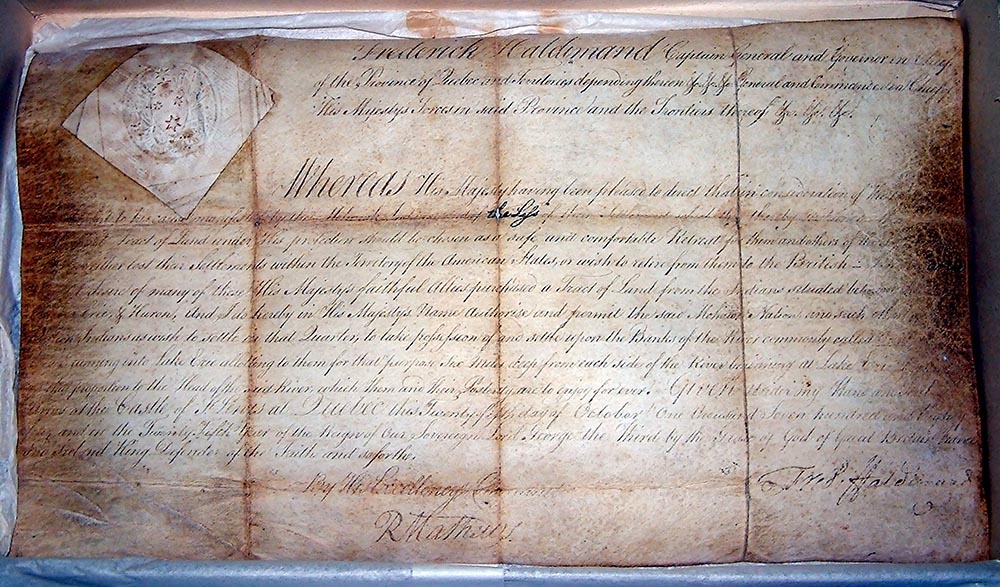
R. v. Secretary of State for the Home Department, ex parte Doody

Home » Case Law » R. v. Secretary of State for the Home Department, ex parte Doody
  1. Case Title & Citation
    R. v. Secretary of State for the Home Department, ex parte Doody, [1994] 1 AC 531 (UK House of Lords).

  2. Decision Summary (Neutral Overview)
    This case concerned life-sentenced prisoners in England challenging the Home Secretary’s practice of setting minimum terms (tariffs) without giving them reasons or an opportunity to make representations.

The House of Lords held:

  • While Parliament did not expressly require reasons, fairness in these circumstances did.

  • Prisoners should be informed of the judicially recommended tariff and be given an opportunity to make representations before the Home Secretary fixed a different term.

  • Procedural fairness can require reasons where decisions have grave consequences for individuals.

  1. Historical & Legal Context
    Doody sits within the development of modern administrative law in the UK, where courts expanded the content of “natural justice” and procedural fairness. It shows that even where statutes are silent, fairness may demand disclosure and participation.

  2. Key Legal Principles Identified in the Case

  • Procedural fairness is flexible, but its content depends on context.

  • Where state decisions deeply affect rights/liberties, fairness may require:

    • Reasons, and

    • A chance to respond.

  • Ministers exercising broad discretion are still subject to fairness duties.

  1. Implications for Haldimand, Loyalist, and Mohawk Questions

  • When Canada, Ontario, or municipalities make decisions that reshape land, jurisdiction, and economic life on Haldimand lands, Doody supports the argument that “business as usual” without reasons is unlawful.

  • It undercuts the idea that governments can silently treat Haldimand as ordinary Crown land without explaining how they reconcile that with the written instruments.

  1. Points of Interest to Mohawk of Grand River Posterity

  • Doody backs the demand that governments give clear, recorded reasons when they claim jurisdiction over Haldimand territory or refuse to recognize Mohawk Loyalist posterity.

  • If they cannot provide coherent reasons that square with Haldimand, Dorchester, and Simcoe, the absence itself is evidence of legal and constitutional failure.

  1. Unresolved Questions / Future Research Directions

  • Could a Canadian court require governments to issue reasoned decisions specifically addressing Haldimand when they:

    • Approve developments,

    • Enforce taxes, or

    • Refuse hereditary registries?

  • How far can procedural fairness be pushed where the “decision” is a century-long pattern rather than a single administrative act?

  1. Sources

  • R. v. Secretary of State for the Home Department, ex parte Doody, [1994] 1 AC 531.

  • UK administrative law commentary on fairness and reasons.

373 words

Sign up to the Newsletter!
Get the latest articles and news delivered to your mailbox.

Leave a Reply

Your email address will not be published. Required fields are marked *

Categories


About Benjamin Doolittle U.E.

listen to BLOODLINE

“Bloodline” follows the Haldimand Proclamation from its original promise to the present fight to have it honoured. The track moves through Crown grants, broken commitments, and the legal and political road back to enforcement, asking listeners to hear the Proclamation not as a relic of the past, but as a living obligation that still binds the Crown to the Mohawk Nation of Grand River.

Artist: One Way Current
Writer: Benjamin Doolittle UE
Producer: One Way Current
Publisher: Corn Press Publications
Affiliation: Six Miles Deep / Mohawk Nation of Grand River

WHITE PAPER

CROWN PLUS

Crown Plus is an initiative of the Mohawk University, dedicated to restoring truth, lawful continuity, and honour in the interpretation and application of the Haldimand Proclamation of 1784 — the foundational covenant between the Mohawk Nation and the British Crown.

This paper is divided into three parts, each exploring a distinct dimension of the Haldimand covenant: its legal origins, its modern violations, and the path toward lawful restoration. Together, they form the living record of a truth that has been long buried beneath colonial misinterpretation.Crown Plus stands for the principle that the Mohawk Nation is not a subject of the Crown, but a co-sovereign pillar upon which the Canadian state itself rests.

The phrase “Crown Plus” reclaims the language of Canada’s political history — a response to the White Paper (1969) and Red Paper (1970) — and reframes it in the Mohawk context. Where others spoke of “citizens plus,” we assert “Crown Plus”: the indivisible bond of alliance, honour, and hereditary right between the Mohawk and the Crown.

Part I — The Legal Foundations and Historical Continuity

Explores the origins of the Haldimand Proclamation, the Dorchester correction, the Mohawk–Crown alliance since Queen Anne, and the constitutional distinctiveness of the Mohawk Loyalist posterity.

Part II — Modern Violations, Fiduciary Duties, and Institutional Responsibility

Documents the breach of fiduciary duty by Crown agents, the propagation of false land acknowledgements, and the complicity of academic, corporate, and judicial institutions in sustaining unlawful occupation.

Part III — Framework for Restoration, Recommendations, and the Path Forward

Outlines a ten-year restoration plan, proposes the Mohawk Posterity Registry and Royal Commission of Continuity, and reaffirms the spiritual and legal covenant through the Crown Plus Initiative.