The Haldimand Tract: Mohawk Loyalists, Hereditary Rights, and Crown Honour

- Description
- Curriculum
- FAQ
- Notice
- Reviews
- Grade
Introduction
HALDIMAND 101 offers a structured, college-level introduction to the Haldimand Tract and associated instruments from a Mohawk Loyalist perspective. Students will read and unpack key documents including the Haldimand Pledge (1779), the Haldimand Proclamation (1784), Lord Dorchester’s Proclamation and Mark of Honour (1789), and the Simcoe Proclamation (1796), alongside modern interpretations and case examples.
The course situates these instruments in relation to hereditary rights, band council structures, Crown honour, and Canada’s constitutional framework.
This micro-course introduces learners to the Haldimand Tract, the Mohawk Loyalist alliance with the British Crown, and the framework of hereditary rights and Crown honour that still matters today.
Course overview
This micro-course introduces the Haldimand Tract as a living legal-historical framework, not just a chapter in a textbook. Starting from the Haldimand Pledge (1779) and Proclamation (1784), and moving through Dorchester’s Mark of Honour and Simcoe’s registry idea, we explore how Mohawk Loyalist posterity were meant to “enjoy forever” their quarter along the Grand River—and what that means today.
You’ll learn how later systems (Indian Act administration, band councils, provincial and municipal structures, settlement trusts) were layered over Haldimand lands, often without properly honouring the original instruments. The course names and explains the resulting jurisdictional vacuum, where governments act “as if” their usual laws apply, while Mohawk heirs are treated as ordinary stakeholders instead of posterity with a perpetual interest.
Through clear lessons, quizzes, short written exercises, and a final reflection, you’ll build the vocabulary to talk about:
-
Perpetual interest and posterity
-
Their quarter and such other
-
Hereditary standing and the Mark of Honour
-
Honour of the Crown as an ongoing obligation with no statute of limitations
The course is paired with the Encyclopedia and Lexicon on Six Miles Deep / Mohawk University, so you can keep studying key instruments and terms long after you finish.
What you’ll learn
By the end of this course, you will be able to:
-
Describe the historical and geographic scope of the Haldimand Tract along the Grand River.
-
Explain the core instruments: Haldimand Pledge (1779), Haldimand Proclamation (1784), Dorchester’s Mark of Honour (1789), and Simcoe’s role in hereditary recognition.
-
Use key terms like exclusive use and enjoyment, to enjoy forever, posterity, their quarter, and such other in a clear, grounded way.
-
Distinguish hereditary Mohawk Loyalist posterity from later administrative categories such as Indian Act bands and trust beneficiaries.
-
Identify how misadministration and a jurisdictional vacuum appear in areas like policing, taxation, development, and settlements on Haldimand lands.
-
Articulate why there is no statute of limitations on Crown honour or on the perpetual interests created by Haldimand.
-
Outline practical paths for research, advocacy, education, and institution-building that move practice closer to the honour of the Crown on Haldimand lands.
Who this course is for
This course is designed for:
-
Mohawk and other Haudenosaunee learners wanting a structured introduction to the Haldimand Tract.
-
Community members, organizers, and educators seeking language to explain what is happening on Haldimand lands today.
-
Students, researchers, and allies who want to move beyond surface-level “land acknowledgement” into a deeper understanding of hereditary standing, Crown honour, and jurisdiction.
-
Anyone interested in the relationship between treaty-like instruments, loyalist history, and contemporary Canadian law and policy.
No legal training is required. The course is written in clear, accessible language while still engaging with serious concepts.
Course format & duration
-
Format: Online, self-paced
-
Estimated total time: ~6–8 hours
-
Each lesson: 20–45 minutes of reading and reflection
-
Plus optional deeper dives into Encyclopedia & Lexicon entries
-
The course is structured into 4 modules:
-
Foundations of the Haldimand Tract
-
Dorchester, Simcoe, and Hereditary Standing
-
Reading the Present and Imagining Remedies
Each module includes short quizzes and written exercises to help you digest and apply key ideas.
Assessment & completion
To complete the course, learners will:
-
Finish the short quizzes embedded in each module,
-
Submit brief written reflections / case exercises,
-
Complete a final reflection assignment:
explaining the Haldimand Tract, its instruments, and the jurisdictional vacuum to someone who has never heard of it before.
You may present this course as a non-credit Mohawk University micro-course or recognize it as the equivalent of 0.5 credit in a future Mohawk University framework, according to how you choose to structure your internal curriculum.
Requirements
-
Ability to read English at a high school or college level
-
Stable internet connection
-
No prior legal or academic background required—just curiosity and respect

-
1
 Lesson 1.1 – Mohawk Loyalists and the Grand River
Before we can talk about the Haldimand Proclamation or modern jurisdiction problems, we need to know: Who, Why, How, What they understood had been promised grant?
-
2
Lesson 1.2 – The Haldimand Pledge of 1779
Before the famous Haldimand Proclamation of 1784, there was an earlier commitment often called the Haldimand Pledge of 1779.
-
3
Lesson 1.3 – Reading the Haldimand Proclamation of 1784
The Haldimand Proclamation of 1784 is one of the core instruments for understanding the Haldimand Tract.
-
4
Lesson 1.4 – Key Terms: Grand River, Haldimand Tract, Loyalist, Posterity, Exclusive Use
This lesson gathers the core terms you’ve seen so far into one place, so we can use them clearly for the rest of the course and in the encyclopedia / lexicon.
-
5
 Module 1 - Key Term Quiz
 -
6
 Module 1 Reflection – What Is the Haldimand Tract?
-
7
Lesson 2.1 – Lord Dorchester’s Proclamation and the Mark of Honour (1789)
If the Haldimand Proclamation explains where Mohawk Loyalists were to live, Lord Dorchester’s Proclamation of 1789 begins to explain who is meant to be recognized across time.
-
8
Lesson 2.2 – Simcoe’s Proclamation and the Registry Idea
If Dorchester’s Mark of Honour tells us who should be recognized as Loyalists and their posterity, John Graves Simcoe represents the next step: How do you organize, record, and confirm that recognition in practice?
-
9
Lesson 2.3 – Hereditary Rights vs Administrative Categories
By this point you’ve seen: The Haldimand Pledge (1779) and Haldimand Proclamation (1784), Dorchester’s Mark of Honour (1789), Simcoe’s role in making Loyalist recognition more systematic.
-
10
Lesson 2.4 – Lexicon Focus: Mark of Honour, Posterity, Registry, Hereditary Title, Recognition
This lesson gathers the core vocabulary from Module 2 in one place.
-
11
Module 2 Heritage Quiz
-
12
Module 2 Case Exercise
-
13
Lesson 3.1 – From Treaties to the Indian Act: Shifts in Administration
What happened when later governments shifted from treaty and proclamation language to Indian Act administration and provincial systems?
-
14
Lesson 3.2 – Band Councils, Trusts, and “Statute of Limitations” Narratives
In Module 2 we separated: Hereditary rights (Haldimand–Dorchester–Simcoe, Mohawk Loyalist posterity), from Administrative categories (Indian Act bands, status, trusts).
-
15
Lesson 3.3 – Jurisdictional Vacuum on the Haldimand Tract
So far in Module 3 we’ve seen: How earlier Imperial instruments (Haldimand, Dorchester, Simcoe) were gradually buried under Indian Act, provincial, and municipal systems, How band councils, trusts, and limitation talk create a layer of administration that doesn’t match the original hereditary framework.
-
16
Lesson 3.4 – Case Snapshots on Haldimand Lands
This lesson gives a few short case snapshots (composite/anonymized) to show how misadministration and jurisdictional confusion can look in real life around: Taxation and municipal authority, Development and commercial projects, Policing and enforcement
-
17
Module 3 Quiz – Misadministration & Jurisdiction
-
18
Module 3 Reflection – Misadministration and the Jurisdictional Vacuum
-
19
Lesson 4.1 – Haldimand Tract in Contemporary Law and Policy
This lesson asks: How is the Haldimand Tract usually handled in today’s law and policy – and what tends to be left out or flattened?
-
20
Lesson 4.2 – Crown Honour and Ongoing Obligations
Now we focus on one of the most important ideas in the whole course: Honour of the Crown – not just as a phrase in old documents,
but as an ongoing obligation that reaches into the present. -
21
Lesson 4.3 – Remedies, Advocacy, and Education
This lesson looks forward: What can be done, realistically, in the present
through research, advocacy, education, and institution-building? -
22
Lesson 4.4 – Navigating the Encyclopedia and Lexicon
This course was designed to be a gateway, not an ending. You now have: A working grasp of the Haldimand–Dorchester–Simcoe chain, Language for hereditary standing, perpetual interest, their quarter / such other, A way to name misadministration and the jurisdictional vacuum, A lens for Crown honour as a living obligation, Some first ideas about remedies, advocacy, and education.
-
23
Final Quiz – Haldimand Tract & Crown Honour
FOR IMMEDIATE RELEASE
January 24, 2026 Ohsweken, Grand River Territory
Mohawk University Encourages Voluntary Participation in Its Free Educational Programs and Opens Channels for Dialogue on Self-Governance Initiatives
The Office of the Secretary-General, Mohawk Nation of Grand River, today invites government officials, ministers, departments, sub-branches, agencies, and officers—at federal, provincial, and municipal levels—to voluntarily complete Mohawk University’s free online educational programs. This participation would promote deeper mutual understanding in all interactions within the Grand River Territory, particularly where Mohawk hereditary rights, interests, or community members are involved, while contributing to enhanced public safety and respectful relations.
This invitation follows the successful launch of HALDIMAND 101: The Haldimand Tract – Mohawk Loyalists, Hereditary Rights, and Crown Honour, now freely available at https://sixmilesdeep.com/courses/. The self-paced micro-course provides a structured, evidence-based introduction to the foundational instruments of the Haldimand Tract (1779–1796), hereditary Mohawk Loyalist posterity, jurisdictional realities, and the ongoing demands of Crown honour.
A second micro-course, currently in active development, will build directly on national reconciliation frameworks by using the widely recognized Four Seasons of Reconciliation program as a primer, while centering local Grand River Mohawk experiences, case law, and critical analysis of how mainstream reconciliation efforts align—or fail to align—with unextinguished Haldimand instruments.
Both courses draw from Six Miles Deep’s expanding public resources, including:
- A growing news and analysis section with meticulously sourced articles,
- An extensive case law archive,
- A comprehensive Encyclopedia and Lexicon of key terms and instruments.
All materials are offered free of charge to community members, officials, educators, researchers, and allies.
“As our residents become increasingly empowered through these educational initiatives—gaining clear knowledge of their historical and legal standing—voluntary participation by officials and peace officers would help ensure smoother, more informed interactions,” said the Secretary-General. “This shared understanding can reduce misunderstandings, support de-escalation, and enhance public safety, especially in situations where policy enforcement meets Mohawk residents in practice.”
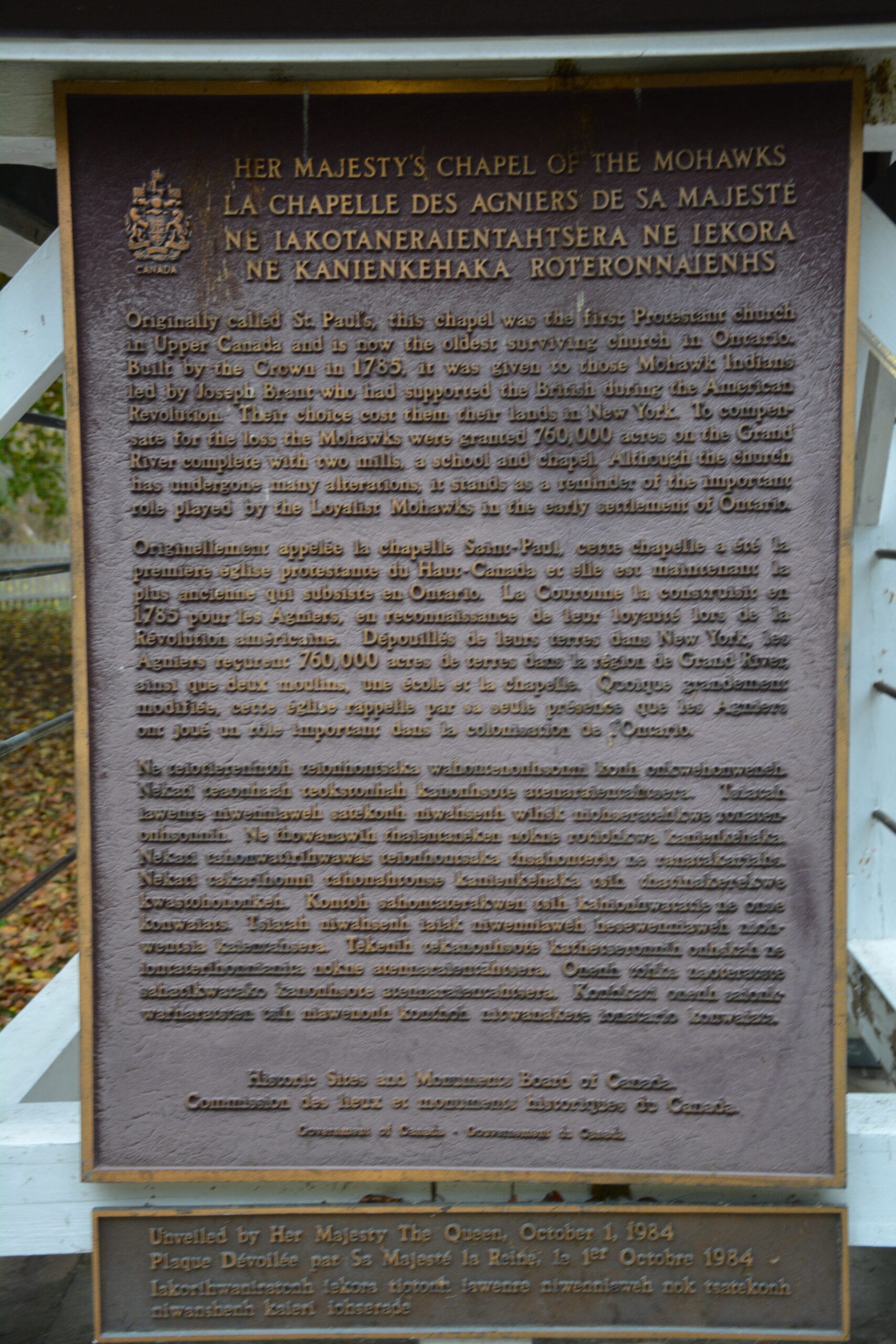
Throughout 2024, the Office issued thirteen directives that operationalize hereditary sovereignty through practical community services and institutions. These include the Grand River Nationalized Driver Insurance Program (GRNDIP, October 28), Mohawk National Vehicle Registry Initiative (NVR, October 31), Mohawk Nation Housing Initiative (MNHI, November 3), Birth and Heritage Registrar Directive (MNBH, emphasized January 2), Mohawk National Transportation and Safety Initiative (MNTSI, November 1), Mohawk National Driver’s Identification Card (MNDIC, November 1), Mohawk Nation Resident Identification Card (MNRID, November 1), Mohawk Environmental Protection and Sustainability Initiative (MEPSI, November 2), Assertion of Sovereignty and Diplomatic Relations (MNGR, November 9), Establishment of Mohawk Agencies and Appointments Directive (MAA, November 9), Grand River Location Determination Rules (MNLDR, November 19), and His Majesty’s Chapel of the Mohawks Reclamation and Preservation Initiative (December 5). Full texts and details are archived on Six Miles Deep.
In addition, the Office of the Secretary-General extends an open invitation to establish and maintain channels of communication with government bodies regarding the Mohawk Nation’s ongoing self-governance frameworks, as well as current and future initiatives. These discussions can explore practical pathways for honourable engagement, informed collaboration, and the advancement of self-determination within the Grand River Territory—consistent with Two Row Wampum principles of parallel paths and non-interference.
These educational and diplomatic efforts build upon years of sustained, multifaceted outreach that extends far beyond digital and print channels. In addition to the comprehensive online platform at Six Miles Deep and the physical distribution of printed research articles to over 280 high-traffic community locations (including nearly every Tim Hortons in Brant County, Six Nations territory, and surrounding areas), the Office has conducted direct in-person engagements with numerous federal and provincial ministers, chiefs of police, mayors, municipal officials, and residents throughout the Grand River Territory. Formal directives—professional correspondence issued on Mohawk University stationery—have been sent to ministries, municipalities, and agencies across Ontario. These directives consistently articulate the Nation’s hereditary position, document historical instruments, and actively seek dialogue with key stakeholders on matters including jurisdiction, development, policing, public safety, and Crown obligations.
Mohawk University welcomes dialogue with government bodies interested in voluntary adoption of these programs, direct communication on self-governance matters, or collaboration on future initiatives.
Enrollment is open to all at no cost.
Media and official inquiries: Office of the Secretary-General Mohawk Nation of Grand River via https://sixmilesdeep.com/contact/
About the Office of the Secretary-General
The Office of the Secretary-General functions as the executive and diplomatic arm of the provisional government of the Mohawk Nation of Grand River, operating in accordance with hereditary governance traditions and the unextinguished instruments of the Haldimand Tract (1779–1796), Two Row Wampum principles of parallel sovereignty and non-interference, and the Covenant Chain alliance.
Led by the Secretary-General, the Office serves as the primary point of external contact for the Nation, handling:
- Formal diplomatic correspondence and directives to federal, provincial, and municipal governments, ministries, agencies, police services, and other stakeholders;
- Issuance of national initiatives and programs that operationalize sovereignty through practical community services (e.g., the thirteen 2024 directives establishing vehicle registration, driver identification, housing, environmental protection, birth/heritage registry, transportation safety, diplomatic relations, agency appointments, location determination rules, and cultural reclamation efforts);
- Direct in-person and written engagements with ministers, chiefs of police, mayors, municipal officials, and residents across the Grand River Territory;
- Coordination of public education and institution-building through Mohawk University and the Six Miles Deep platform.
While the Office provides a professional, accessible interface for external relations—facilitating dialogue on jurisdiction, Crown honour, public safety, development, and reconciliation—the internal processes of hereditary governance (including clan mother guidance, longhouse consensus, and confidential deliberations) remain private and sovereign.
The Office’s ongoing work demonstrates active, persistent stewardship of Mohawk Loyalist posterity interests along the Grand River, inviting honourable engagement from all parties in line with historical obligations and contemporary realities.
About Mohawk University and Six Miles Deep
Mohawk University serves as a provisional institution of higher learning and knowledge stewardship for the Mohawk Nation of Grand River, rooted in hereditary governance traditions and dedicated to the advancement of self-determination within the Grand River Territory.
Established to support the development of Mohawk self-governance, the University functions as the primary public-facing arm of the Nation’s educational and diplomatic efforts. While the internal structures of hereditary governance—including clan-based decision-making, longhouse protocols, and confidential deliberations—remain private and protected, Mohawk University provides an accessible, professional interface for engagement with external parties, including governments, municipalities, courts, researchers, and the broader public.
Through its programs and resources, the University actively fosters:
- The preservation and transmission of historical knowledge, particularly regarding the Haldimand instruments (1779–1796), Two Row Wampum principles, and Covenant Chain obligations;
- The development of contemporary governance capacity, including legal-historical research, policy analysis, and community education;
- The articulation of the Nation’s position on jurisdiction, Crown honour, land interests, and reconciliation in public forums.
Six Miles Deep operates as the University’s flagship digital platform, hosting a comprehensive suite of freely accessible resources:
- Structured online micro-courses (e.g., HALDIMAND 101 and upcoming reconciliation programming);
- A growing archive of sourced research articles and news analysis;
- Dedicated sections on relevant case law;
- An expanding Encyclopedia and Lexicon defining key terms, instruments, and concepts from a Mohawk hereditary perspective.
All materials are offered without cost to support education, informed dialogue, and the honourable resolution of outstanding matters affecting the Grand River Territory. By maintaining this clear distinction—public education and outreach through the University, while preserving the privacy of internal governance—Mohawk University enables consistent, authoritative representation of the Nation’s interests in the modern context.
-30-
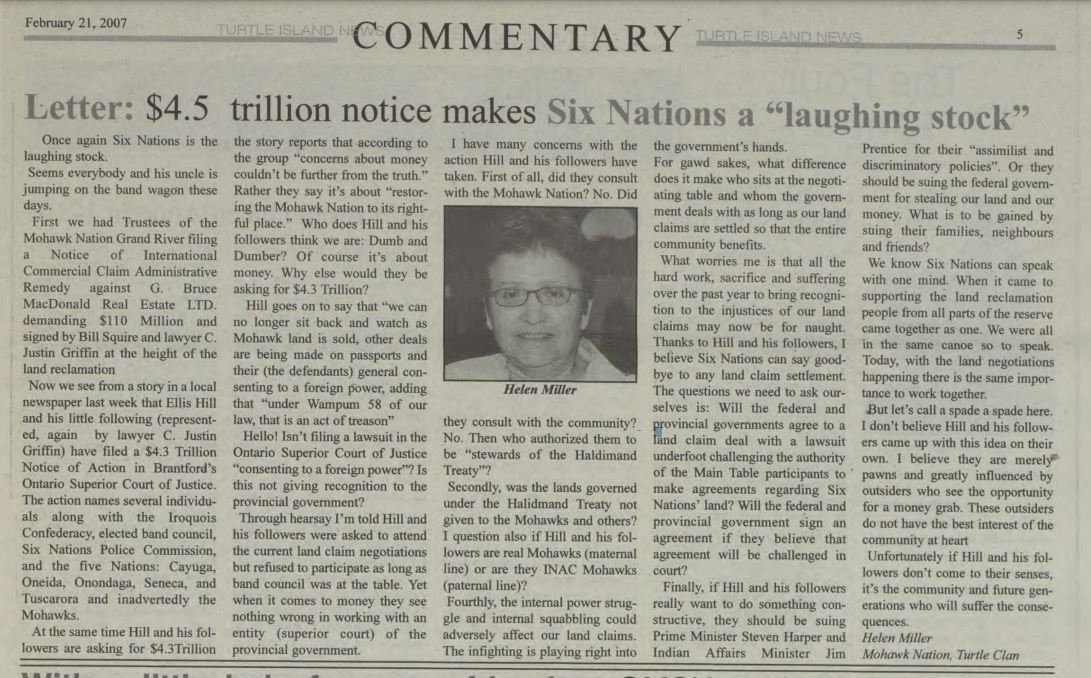
Learn the history, documents, and legal realities of the Haldimand Tract from a Mohawk Loyalist perspective. This self-paced online course uses our Encyclopaedia and Lexicon to guide you through the Haldimand Proclamation, Dorchester and Simcoe Proclamations, hereditary rights, and today’s jurisdictional challenges. Approx. 8–12 hours. Open to community members, students, and allies.
No formal academic prerequisites.
Recommended: Grade 11 reading level and basic familiarity with Canadian history is helpful but not required.
All key terms are supported by the site’s Encyclopedia and Lexicon, which are integrated into the course.
Mohawk community members and descendants seeking a structured understanding of their historical and legal position on the Haldimand Tract.
Students in history, Indigenous studies, law, political science, or related fields.
Community workers, educators, journalists, and allies who need accurate background to speak and act responsibly on Haldimand matters.