
|
Getting your Trinity Audio player ready…
|
When the Haldimand Proclamation is discussed, a familiar question often arises: What right did the Crown have to give the Mohawks their own land? It’s a fair question—but one rooted in a modern concept of property that doesn’t reflect the historical and political context of 1784.
At that time, the Crown wasn’t acting like a private landowner handing over property. It was functioning as an imperial power navigating the aftermath of war, seeking to stabilize a contested frontier while fulfilling its obligations to the Mohawk—Indigenous allies who had been displaced as a direct result of their loyalty to Britain during the American Revolution.
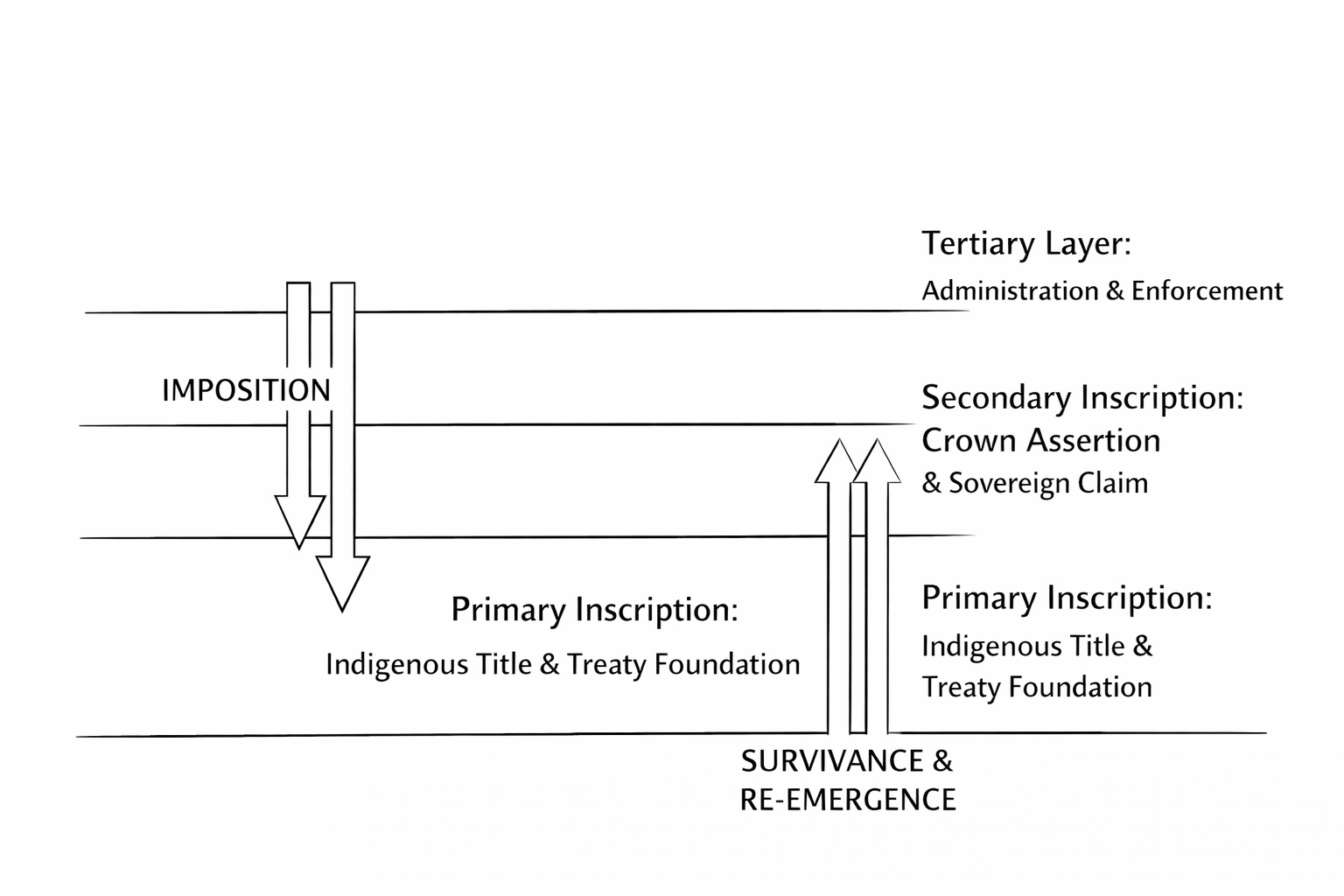
To understand the Proclamation, it must be read within its proper context: a landscape that was already politically and territorially Indigenous. The Grand River tract was not empty Crown land awaiting disposal. Decades earlier, the Nanfan Treaty of 1701 had dealt with Haudenosaunee territorial claims across a vast region. While interpretations of that treaty vary, what’s clear is that British officials recognized the area as Indigenous land requiring diplomatic negotiation, not unilateral settlement.
This recognition changes the meaning of “Crown authority.” The Crown was not operating in a vacuum, but within a political environment where Indigenous nations were sovereign actors, and territory was governed by their own laws and customs. In such a setting, Crown power functioned less as ownership and more as a mediator or protector of political relationships.
That’s why the phrase “the Crown gave them land” is misleading. The land along the Grand River was already part of an Indigenous territorial sphere. The Crown had long understood that it couldn’t manage such regions without negotiation, purchases, and binding commitments. The Proclamation was not a discretionary handout—it was a formal response to a political and military crisis.
The American Revolutionary War had displaced the Mohawk and other Haudenosaunee allies from their homelands south of the new international border. This wasn’t collateral damage—it was the cost of alliance. The Crown, now responsible for its allies’ fate, needed to provide secure territory without igniting new conflicts with settlers or other Indigenous nations. The Haldimand Proclamation was the mechanism chosen to resolve this.
Its language reflected a serious political undertaking: a specific tract, defined beneficiaries, and a long-term commitment. This wasn’t a gift—it was a territorial settlement, in line with how empires historically stabilized contested regions after conflict.
Importantly, the issue wasn’t just land—it was territory. Land, in the market sense, is divisible, transferable, and commodified. Territory is broader: it is a space in which a people live, govern, travel, hunt, build, and maintain cultural and political life. The Mohawk settlement was a promise to protect such a space—not just a plot of land.
If we understand the Haldimand Proclamation as a territorial assurance, then the Crown wasn’t acting as a generous donor, but as a guarantor. And unlike a gift, which can be revoked in spirit or convenience, a territorial obligation limits the discretion of the giver. Once land was set apart for Mohawk use, it could no longer be treated as ordinary Crown land. That was the entire point of “setting it apart”: to remove it from the churn of speculation, encroachment, and bureaucratic management.
The idea that the Crown imposed this location on the Mohawk is also inaccurate. The Grand River was chosen and accepted by the Mohawk in the wake of war. This was a negotiated relocation following massive loss—not a passive resettlement. Recognizing that restores a key point: the Mohawk were political actors navigating post-war realities, not merely recipients of imperial charity.
Nor was the Grand River settlement isolated. It was one of two principal Mohawk resettlements, along with the Bay of Quinte, established in response to the same wartime alliance. These weren’t gifts; they were part of a larger imperial obligation, grounded in the Crown’s honour and the credibility of its word. Describing them as gifts strips away their meaning as constitutional settlements made in exchange for loyalty and service.
This brings us to a vital legal principle that still applies: under Canadian constitutional law, one part of the Constitution cannot override another. Later statutes—such as the Indian Act—cannot nullify constitutional obligations made earlier, particularly those involving Crown-Indigenous agreements. Yet, over time, governance has relied on these later frameworks while sidelining the Haldimand promise. That raises a serious contradiction: governments invoke Crown authority to justify control and regulation, but deny that same authority when it protects Indigenous interests. This selective application is politically incoherent and legally unsustainable.
If the Crown had no authority to guarantee the land in 1784, then later governments have no legitimate basis to tax, regulate, subdivide, or alienate it. Modern land governance assumes the Crown could make binding commitments. If that’s true, then those commitments remain in force. The issue isn’t the Crown’s capacity—it’s whether that capacity has been respected.
Meanwhile, modern land systems have evolved in a way that ignores these original territorial obligations. Property registration, municipal zoning, and real estate markets are all built on the assumption that land is a commodity. But the Haldimand obligation doesn’t fit this framework. If it had been an ordinary land grant, it would have been absorbed into the market like any other. The fact that it hasn’t—and continues to generate friction—is a sign that the interest is territorial, not transactional.
This friction led to a quiet workaround: silence. Over time, interests like the Haldimand claim were acknowledged in meetings, raised in litigation, and discussed in public, but rarely integrated into the actual systems that govern land. That silence is often framed as pragmatism—but when an interest is known, historically grounded, and repeatedly raised, ignoring it becomes a deliberate choice. In law and governance, that crosses from oversight into erasure.
In response, current efforts are underway—especially through work with the Director of Titles and relevant ministries—to develop a lawful and transparent way to record and surface these unresolved constitutional interests. The goal isn’t to force every buyer to resolve centuries of history at the point of purchase. The goal is to stop pretending the issue is irrelevant when it is central to the integrity of both the territory and the governance system.
So, what right did the Crown have? Its authority didn’t come from owning the land in a modern sense. It came from its role as an imperial power managing alliances and responding to the displacements caused by war. The Haldimand Proclamation was a formal settlement—made within a recognized Indigenous landscape, as part of a political relationship, and protected by Crown honour.
The real question isn’t whether the Crown had a pen in 1784. The real question is whether the promise made has been treated as real by the systems that followed. And whether, in law and governance, that foundational obligation has been buried—or respected.
Leave a Reply