
|
Getting your Trinity Audio player ready…
|
For many people living and working along the Grand River, land-title questions only surface when something feels wrong. A development stalls without explanation. A lender hesitates. A “First Nations” clause appears in a purchase agreement with no context. Someone mentions that there may be something beneath the title that never made it onto the registry. What is rarely explained is how long this issue has been known, who has been formally notified, and why continued institutional silence has shifted from historical oversight into a present-day rule-of-law problem.
Ontario’s land titles system functions well for interests that flow from Crown administration: patents, transfers, mortgages, easements, and charges created and extinguished within provincial authority. What it does not automatically resolve are older treaty, trust, and estate interests unless those interests were lawfully surrendered or extinguished. The registry records what the Crown administers; it does not cure jurisdictional defects. For decades, homeowners were encouraged—explicitly or implicitly—to believe that if something did not appear on title, it simply did not exist. That assumption no longer holds.
Recent court decisions in British Columbia forced this reality into public view. In Cowichan Tribes v. Canada (Attorney General), courts acknowledged that Aboriginal title can coexist with fee simple ownership. The recognition itself was not the destabilizing event. The destabilizing issue was what followed: two authorities recognized as legitimate over the same land and people, without clear legal mechanisms governing how those jurisdictions interact in practice.
Where overlapping jurisdiction exists without mutual legal assistance agreements, enforcement protocols, or jurisdictional compacts, the risk is not merely civil confusion. It is arbitrariness. Orders may be issued without reciprocal recognition. Enforcement may occur where authority is disputed. Individuals may be detained, regulated, or compelled under one jurisdiction that another does not recognize.
That warning matters here—but not because the Grand River situation mirrors British Columbia. It matters because the Grand River situation is fundamentally different.
Along the Grand River, the jurisdictional framework already exists. It was established through the Haldimand Pledge of 1779, formalized in the Haldimand Proclamation of 1784, and explicitly confirmed again in 1791, when Upper Canada was constituted. In that confirmation, the Crown pledged the faith of the government to the Mohawks of Grand River and their posterity forever. The territory was not absorbed into the provincial domain; it was held out of it.
That distinction is decisive. The Haldimand instruments were not merely grants of land. They were jurisdictional commitments. They established exclusive use and enjoyment, recognized Mohawk loyalists, and created a constitutional relationship that Canada itself relied upon to legitimize settlement, governance, and continuity. Unlike in British Columbia—where courts are now struggling to implement DRIPA—the Grand River framework presupposed separation of jurisdiction and consent-based interaction from the beginning.
The problem today is not that dual jurisdiction has suddenly appeared. It is that one side of a long-standing jurisdictional relationship has been ignored. Ontario and Canada continued to administer, regulate, tax, police, and transfer lands as though exclusive jurisdiction existed, without securing surrender, consent, or treaty mechanisms that would lawfully bridge that gap. That approach functioned administratively for decades, but it did so by suspending constitutional reality rather than resolving it.
This reality has been raised repeatedly, formally, and on the record for more than a decade.
In or about 2014, notice was provided to Ontario’s land-titles administration regarding unresolved Mohawk interests within the Haldimand Tract and the early development of the Mohawk Land Registry. In 2022, that notice was reiterated as development accelerated and municipalities continued to transact land as though no prior estate existed. The letters were directed to the Director of Titles, Jeffrey W. Lem, asking whether Ontario could lawfully assert exclusive jurisdiction absent Mohawk loyalist surrender and whether section 71 of the Land Titles Act could be used to record notice of unrecognized estates. Mr. Lem acknowledged receipt, advised retaining counsel, and confirmed Ontario would continue operating “in the ordinary course of business.” No substantive guidance followed. Mr. Lem has since passed away. No corrective policy has been issued. No instruction has been provided to homeowners, lenders, registrants, or municipalities. What once appeared as caution now functions as omission.
Parallel notice was provided at the political and regulatory level. Formal correspondence was sent to Members of Parliament and to provincial ministers, including Stephen Crawford, Minister of Public and Business Service Delivery and Procurement whose portfolio includes land titles, registries, and consumer protection. Notice has also been provided to the Solicitor General of Ontario, given that the Ontario Provincial Police operate within that ministry’s oversight, and to the Attorney General of Ontario, Doug Downey, in relation to legal exposure arising from enforcement and premature jurisdictional assumption.
Real-estate regulation has likewise been engaged. The Real Estate Council of Ontario was advised that unresolved Indigenous treaty, trust, and estate interests constitute material facts once known. Ontario courts have already found municipalities liable where known Indigenous interests were withheld from purchasers. Once knowledge exists, professional silence is not neutrality; it is exposure.
Engagement extended beyond correspondence. Over several years, discussions took place with ministries, agencies, and municipalities throughout the Grand River corridor, including mayors, chiefs of police 1, and fire chiefs 2. This included communication with leadership of the Ontario Provincial Police, including the office of Commissioner Thomas Carrique, to ensure awareness of Mohawk transportation, licensing, insurance, and public-safety directives. The objective was harm reduction and avoidance of arbitrary enforcement, not confrontation.
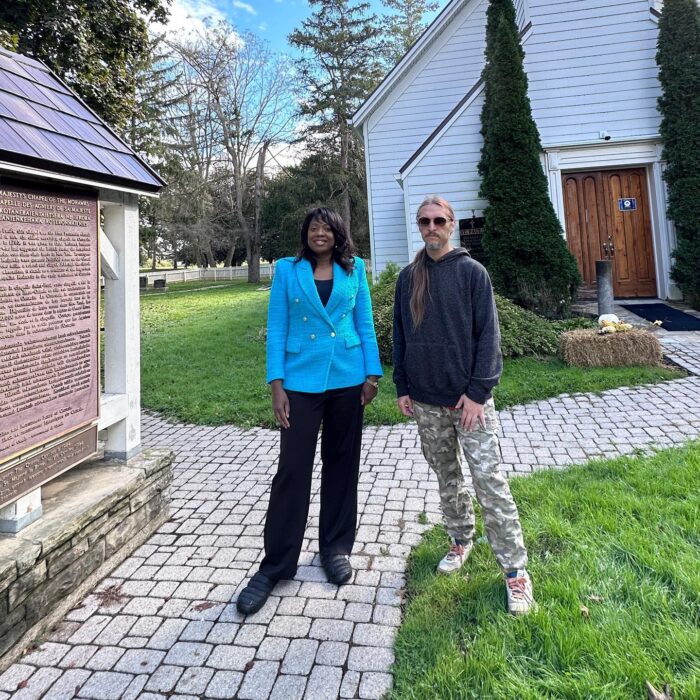
At the federal level, engagement included correspondence with Leslyn Lewis 3, in her capacity as a Member of Parliament for Haldimand–Norfolk and as a participant in federal transport and infrastructure oversight. Provincial and federal Ministers of Indigenous Affairs were also notified of formal objections to municipal governance exercised without consent and of the assertion of Mohawk jurisdiction and sovereignty.
Engagement also extended to the transportation portfolio, where jurisdictional clarity is essential to public safety. Correspondence was exchanged with the Ministry of Transportation under then-Minister Caroline Mulroney, including its Indigenous engagement branch, regarding Mohawk transportation, licensing, and insurance initiatives operating within the Grand River territory. That correspondence acknowledged the initiatives and, in some instances, conveyed support. This engagement further confirms that Mohawk jurisdictional assertions were not theoretical, isolated, or unknown to the Province, but were actively communicated across multiple operational ministries.
Engagement also reached national defence. Correspondence was sent to Bill Blair, raising concerns about diplomatic and national-security implications of overlooking Mohawk boundary rights along the Canada–United States border. Unresolved jurisdiction at borders is not merely a land issue; it is a vulnerability affecting policing, customs, environmental stewardship, and diplomacy.
This work then moved into structured implementation. A series of dated directives were issued governing land registry, housing, transportation, licensing, insurance, environmental stewardship, identification, agency administration, and diplomatic coordination. These are operational instruments, not rhetoric. The Mohawk Land Registry functions as a notice and recording mechanism where Ontario’s register has not reconciled the underlying estate.
Where the record is especially clear, Notices of Interest have been placed on specific parcels. A Gilkinson Street property—where Mohawk interests appear directly in the chain of title and trust and assessment issues were never resolved before a tax sale—served as a forerunner. After notice was given, development halted. That outcome illustrates why notice matters and why unresolved interests cannot safely be ignored once identified.
An additional aspect of this work concerns recovery and protection rather than displacement. Much of the public anxiety around land issues assumes that the only outcomes are litigation, expropriation, or eviction. That assumption is incorrect. From a legal standpoint, unresolved treaty and estate interests raise questions of reversion and priority, not simply competition between “Ontario title” and “Mohawk title.” The issue is whether a competing interest ever lawfully arose, not whether something new must be taken.
For that reason, the practical focus of the registry and housing initiatives has been on safeguarding people. Many residents within the Haldimand Tract are already under pressure from rising property taxes, enforcement actions, or mortgage stress. Rigid adherence to assumed provincial exclusivity does not protect them; it often accelerates loss through tax sale, foreclosure, or eviction.
One option under consideration is the use of voluntary lease or life-lease arrangements with Mohawk authorities. These arrangements are not compulsory. They are designed to stabilize tenure, secure continued occupancy, and allow residents who choose it to have their interest recognized within the Mohawk registry framework. In some cases, such arrangements may protect against competing pressures such as tax enforcement while larger jurisdictional issues are resolved transparently over time. This approach is consent-based and humane. It recognizes that people living on the land today are not the architects of historic omission.
As this work progressed through 2024–2025 4, a consolidated plan of action was circulated to provincial and federal ministers. That plan is now formalized in a white paper setting out a ten-year outlook going into 2026 and beyond, focused on lawful recovery, registry development, negotiated arrangements, and—where necessary—court clarification. The aim is to reduce uncertainty over time rather than compress it into crisis.
That outlook also addresses boundary and waterway issues that have largely escaped public attention. Engagement took place with the Surveyor General of Canada and the International Boundary Commission, including discussion of riparian shoreline interests. The Grand River is not merely inland; it engages shared waterways abutting the United States. Riparian rights were never extinguished by the international boundary. Ignoring them compounds legal, environmental, and diplomatic risk.
A recurring obstacle encountered throughout this process has been the tendency to treat “Six Nations” as a single proxy for distinct nations. While such aggregation may be administratively convenient, it is not legally neutral. The treaties and proclamations at issue were entered into with specific nations and peoples, not a federation. Collapsing those distinctions risks arbitrary denial of nationhood. Article 15 of the Universal Declaration of Human Rights 5 affirms the right to a nationality and prohibits arbitrary deprivation of it. Proper administration requires distinction, not amalgamation.
This process is not a declaration that homes are void. It is not a call for panic. It is not a mass displacement effort. The default objective is stability of occupancy and reconciliation, not shock.
At the same time, consequences arise from conduct, not identity. Office holders and professionals who know of these obligations and continue to authorize development, suppress disclosure, or exercise jurisdiction without consent expose themselves to risk. Under Canadian law, negligence includes omissions. Once notice exists, inaction is no longer a policy choice.
For homeowners, the message is seriousness, not fear. Seek advice. Ask questions. Transparency protects you more than silence.
For brokers, lenders, insurers, developers, and municipalities, the expectation is the same. Treat this as a constitutional and consumer-protection issue. Continuing as though nothing has changed does not preserve innocence; it transfers risk..
Footnotes:
- The Staff. (2024, May 21). Breaking bread with Police Chief Robert A. Davis. Two Row Times. https://tworowtimes.com/news/local/breaking-bread-with-police-chief-robert-a-davis/[↩]
- The Staff. (2024, May 29). The tip of the iceberg: Addressing safety and jurisdiction in Brantford. Two Row Times. https://tworowtimes.com/news/local/the-tip-of-the-iceberg-addressing-safety-and-jurisdiction-in-brantford[↩]
- The Staff. (2023, October 18). MP Leslyn Lewis meets with Mohawk University to discuss community initiatives. Two Row Times. https://tworowtimes.com/news/local/mp-leslyn-lewis-meets-with-mohawk-university-to-discuss-community-initiatives[↩]
- The Staff. (2023, September 15). PRESS RELEASE: Mohawk University announces two groundbreaking initiatives. Two Row Times. https://tworowtimes.com/news/news-release/press-release-mohawk-university-announces-two-groundbreaking-initiatives-the-mohawk-university-drivers-program-and-the-housing-initiative[↩]
- United Nations, (1948, Art. 15). Universal Declaration of Human Rights. https://www.un.org/en/udhrbook[↩]
Leave a Reply