
|
Getting your Trinity Audio player ready…
|
A lot of people already understand this story instinctively, even if school never taught them the language for it. They know the Mohawk world along the Grand River is not simply another “Canadian community.” They know the border is something you encounter every day, but it is not the final authority over who belongs, who governs, or how relationships are formed. And they know the relationship between the Mohawks and the Crown did not begin with modern courts, policies, or reconciliation language.
What is often missing is an explanation of how relationships are formed under Haudenosaunee law—and why, once formed properly, they cannot simply be walked away from.
The first threshold: the Edge of the Woods
In Haudenosaunee law, no one enters a village, a territory, or a governing relationship by accident. The first place a newcomer encounters is the Edge of the Woods—a threshold where intentions are declared and status is defined. From there, a person may be invited closer, and only later—if consent is given—into the village, and finally into the Longhouse.
The rule is simple: entry is conditional, deliberate, and governed by protocol. Relationship comes only through process.
Adoption under the Great Law of Peace is one such process. It is serious, binding, and familial. Adoption does not mean permission to pass through; it means becoming responsible to the house.
The Grand River promise
After the American Revolution, Mohawk allies of the Crown lost their homes in what became the United States. The Crown’s response was the Grand River settlement. The Haldimand instrument speaks in terms that are not temporary or symbolic. It describes land set aside for the Mohawks and their posterity—language that assumes continuity rather than expiry.
From a Haudenosaunee perspective, this was not a gift. It was recognition of an existing relationship, already tested through alliance and war.
1869: entry beyond the Edge of the Woods
In 1911, Mohawk writer E. Pauline Johnson (Tekahionwake) published A Royal Mohawk Chief, describing an event that took place in 1869, when Prince Arthur, Duke of Connaught, first visited the Grand River. 1
Johnson’s account describes a full induction carried out according to ancient protocol: chiefs present, ritual words spoken, clan participation observed, and a name conferred. The Prince was not simply welcomed; he was received. In Haudenosaunee terms, the Crown’s representative did not remain at the Edge of the Woods. He was brought forward into a Longhouse relationship.
The broken circle: a constitutional act
Johnson records a detail that cannot be overstated. The Haudenosaunee Confederacy was governed by a fixed constitutional structure of fifty chief titles—no more, no less. That number was law.
To receive Prince Arthur properly, Johnson writes that the old circle was effectively shattered and refashioned, creating a fifty-first title. This had never been done before—not even when the Tuscarora were adopted into the Confederacy. For the Crown, the structure itself was altered.
This tells us something precise. The adoption was not honorary. It was constitutional. Under Haudenosaunee law, acts at that level are binding.
Condolence and continuity
Condolence is not only about grief. It is a governing act. It clears the ears, the eyes, and the throat so leadership can continue with a clear mind. It is how authority is renewed after death.
That matters because the Crown is continuity. When a monarch dies, the relationship does not end—but it must be renewed correctly.
The Crown returns with authority
Prince Arthur later returned to Canada as Governor General from 1911 to 1916. By then, he was not returning as a stranger. He was returning as the Crown’s representative who already carried a Longhouse title.
This is crucial. A Governor General is not simply a visiting dignitary. He exercises the Crown’s executive authority inside Canada. In that period, the Crown’s representative acted formally within Canadian institutions, including the Privy Council. In other words, the same person held inside the Longhouse by condolence and adoption was also acting outwardly as the constitutional instrument of Canadian governance. That overlap matters, because it shows the Longhouse relationship was not formed with a powerless figure. It was formed with the Crown’s operative hand in Canada.
Loyalty affirmed, not demanded
During the First World War, Mohawk families at Grand River were already deeply involved. Young men had volunteered. Losses were being felt. Loyalty was lived, not coerced.
From a Longhouse perspective, loyalty deepens obligation. It does not erase it.
1917: Conscription, the clan mothers, and the wampum reminder
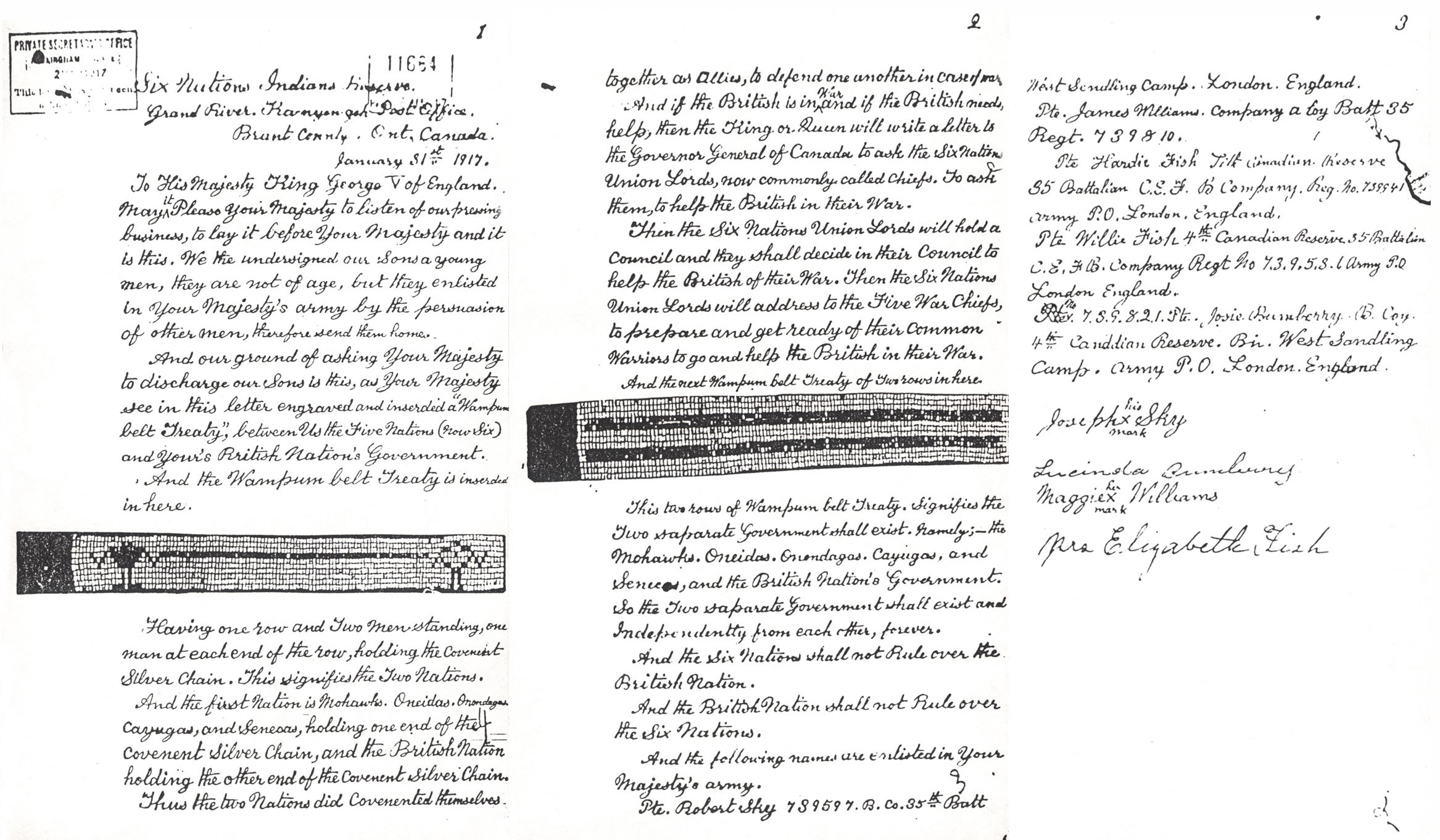
In 1917, Canada enacted the Military Service Act, triggering what became known as the Conscription Crisis. Compulsory service crossed a line. It treated Mohawk men not as allied peoples who chose their obligations, but as subjects of Canadian statute.
In response, clan mothers from Grand River wrote directly to the King to correct the record. This was not a plea for exemption. It was a constitutional reminder.
The letter asserted that Mohawk obligations to the Crown arose from covenant and alliance, not unilateral Canadian legislation. With the correspondence were photographs of wampum, including the Two Row Wampum and another treaty belt, presented not as cultural artifacts but as legal instruments witnessing that relationship.
The outcome matters. Canada amended the application of conscription, acknowledging that the people represented by those clan mothers were not amenable to compulsory service under that Act. In plain terms, when Longhouse law was asserted—by women holding lawful authority—Canada adjusted its statute.
This moment is critical. It shows that as late as 1917, Canada recognized that there were peoples within its borders whose relationship to the Crown did not arise from Parliament alone.
It also exposes a growing tension. Within a few years, Canada would ask Britain whether the “Six Nations” were amenable to Canadian legislation—despite the earlier acknowledgement that Mohawk Loyalist posterity stood on a distinct constitutional footing. The administrative label “Six Nations” increasingly blurred that distinction, but the 1917 correspondence shows it had not yet disappeared.
1919: the platform, the council, and the renewal of the Crown
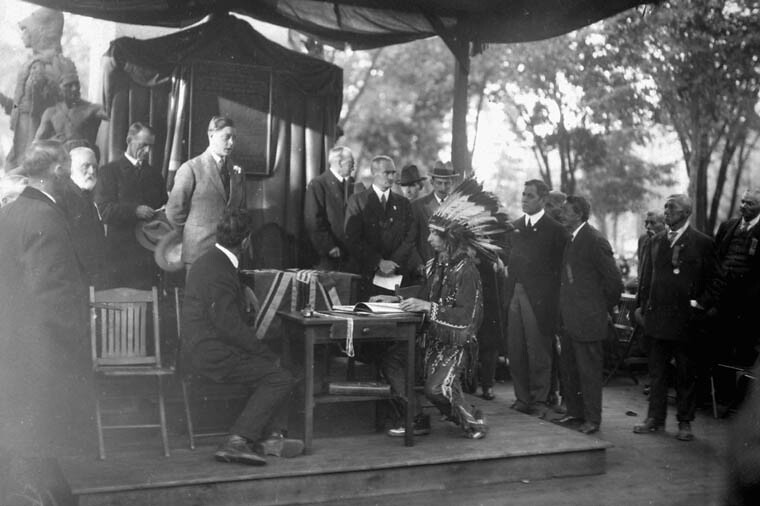
In 1919, the Crown returned again—this time in the person of Prince Edward, Prince of Wales, later King Edward VIII. This moment completes the constitutional sequence begun in 1869.
The visit was widely remembered as one of the most significant events in Brantford’s history. Thousands lined the streets. Businesses and schools closed. A platform was erected in Victoria Park, deliberately placed beneath the monument to Joseph Brant (Thayendanegea)—the Mohawk leader whose alliance made the Grand River settlement possible.
Six young women, each representing one of the Six Nations, stood on either side of the platform. Dressed in white, they wore sashes of maple, oak, and pine, symbolizing Canada, England, and the Haudenosaunee, and carried baskets of roses adorned with autumn leaves. The Confederacy Chiefs stood in full array. This was set as a council, not a parade.
After formal introduction, the Mohawk Council convened to determine the name to be bestowed upon the Prince. He was presented with three names and asked to choose. The one he accepted was Da-yon-hem-se-ia, meaning “Dawn of Day.” He was condoled and received as a Mohawk chief, associated with the Turtle Clan, and he signed the council roll—an act previously done only by his uncle, the Duke of Connaught.
What was on the table
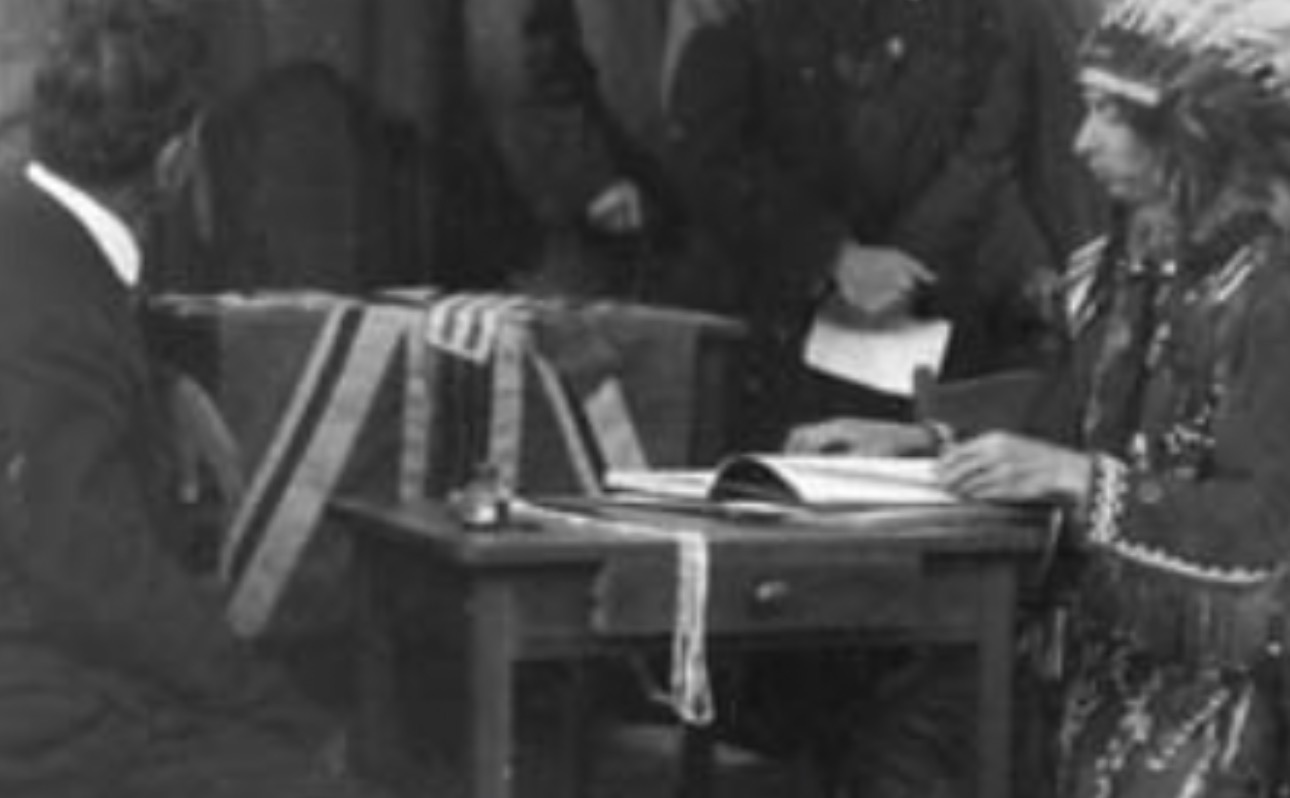
Photographs from the 1919 ceremony show that this was not symbolic or improvised.
At the centre of the platform table lay a Union Jack, spread flat, signalling Crown authority. Beside it was a book, understood in community memory as a condolence or council record, consistent with the Prince signing the roll.
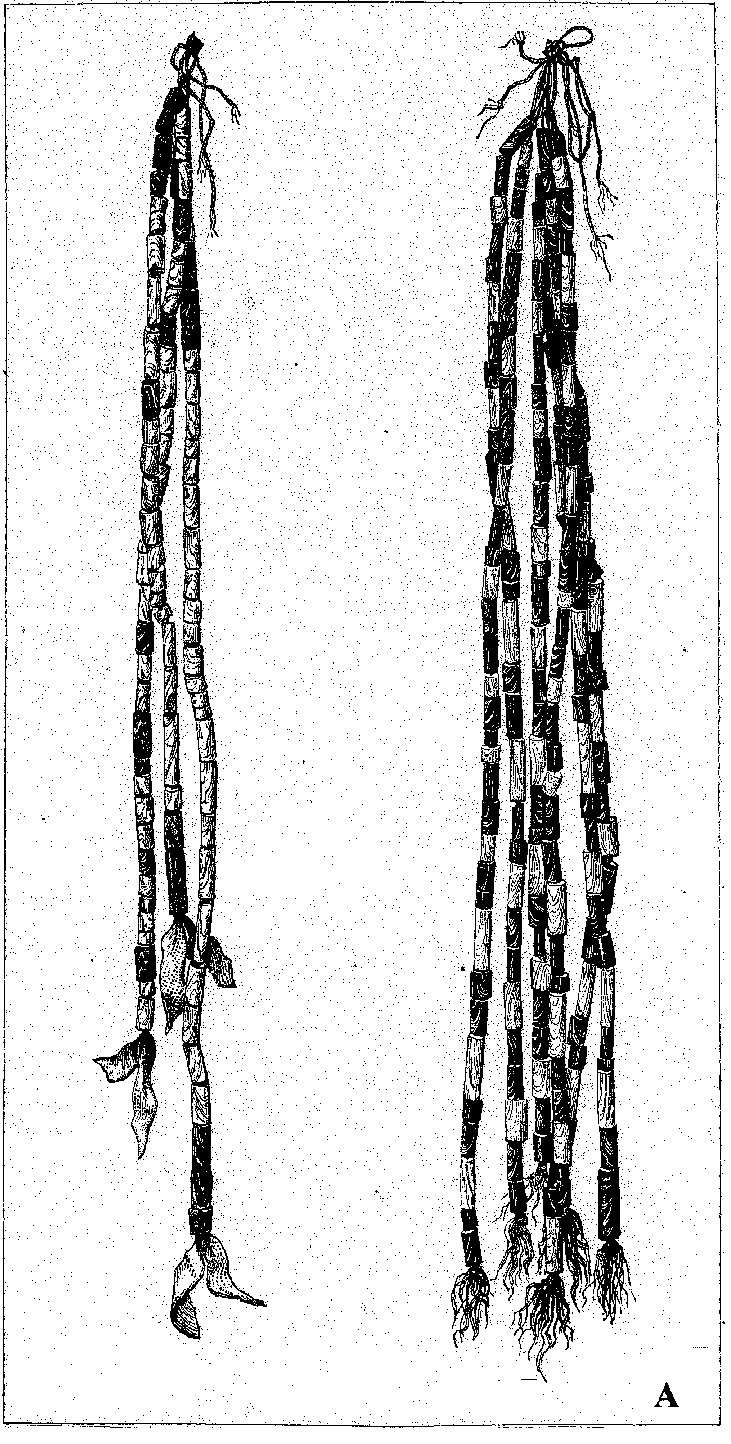
Most significant were the wampum strings laid openly on the table, resting atop the flag. Wampum is law. It records agreements and bears witness to what has been done. Wampum is not displayed unless the matter is intended to endure.
Their presence confirms that the ceremony was a condolence-based adoption, carried out under Longhouse law and recorded in Indigenous legal form, not merely observed.
What the photograph confirms
 In the photograph of the Prince’s adoption, where Chief John Buck (Skanawati) is seated at the table, the physical arrangement of objects confirms the legal character of the event. From the front edge of the lower table, wampum strings are visibly hanging down, deliberately displayed and unmistakable. In Haudenosaunee practice, wampum is present only when law is being spoken, witnessed, or renewed. Its placement at the working table indicates that the proceedings were formal and binding, not symbolic or theatrical.
Behind this table is a second, slightly elevated table, set apart from the first. Draped across it is the Union Jack, clearly marking Crown authority. Resting on top of that flag is a Two Row Wampum. The arrangement is deliberate: the Crown’s symbol lies beneath the treaty belt. In Haudenosaunee diplomatic language, this configuration signifies parallel authority and mutual obligation. It does not indicate subordination of one party to the other, but coexistence according to agreed law.
Also in attendance was Alexander Graham Bell, who had previously been made an honorary Mohawk chief in recognition of his contribution to the codification of the written Mohawk language. Bell’s presence matters not as celebrity, but as confirmation that those present understood something basic that is often denied today: language carries law, and law carries continuity. A people who records governance through ceremony, wampum, speech, and careful naming is not operating in a “pre-legal” world. It is operating inside a legal order that has its own methods of recordkeeping and transmission.
Taken together—the wampum strings hanging from the table, the Two Row Wampum laid upon the Union Jack, the council record book, and the presence of witnesses who understood the weight of law—the photograph corroborates the written record. The Prince was not merely welcomed. He was condoled, adopted, and received according to Longhouse law, in a manner intended to endure.
Skanawati and the law governing departure
The ceremony is closely associated with Chief John Buck (Skanawati), whose name is tied to Longhouse principles governing peace, war, and departure under the Law of War and Adoption. Under what is often called Skanawati’s law, a fundamental rule applies: if one leaves the Longhouse over vendetta or dispute, one leaves empty-handed. Authority, records, and collective instruments remain with the house.
This principle explains why the wampum was on the table in 1919. It also explains why later removals of records and wampum are remembered not as neutral administration, but as violations of Longhouse law.
A gift carved in permanence
Before departing, Chief Dawn of Day presented the Mohawks with a carved wooden coat of arms—his own royal arms. In Haudenosaunee diplomacy, the giving of arms signifies shared honour and responsibility. It marked that the relationship was not only spoken but materially acknowledged.
When Prince Edward later became king, he did so as a man already received, named, condoled, and bound within the Longhouse relationship. The carved coat of arms stands as a reminder that the Crown had entered, been renewed, and affirmed its place beneath the rafters.
1919 again: Canada asks Britain while the Crown is being renewed
This is where the story becomes a doozy, because two things happen in the same time window that do not sit comfortably together.
While the Prince of Wales was being condoled and adopted in public at Grand River, Canada was also looking outward—asking Britain whether the Haldimand Proclamation was still active or operational, and whether the “Six Nations” were amenable to Canadian legislation. The effect is hard to ignore. Canada was asking whether the relationship still existed at the same time the Crown was renewing that relationship through the very protocol Canada later tried to erase.
If you want it in plain language, it looks like this: one side was renewing the bond under Longhouse law; the other side was exploring how to exit, domesticate, or reframe that bond inside Canadian legislation.
1922–1924: Canada acts alone
In 1922, Canada asked Britain whether the Haldimand Proclamation was still operative and whether the Six Nations were amenable to Canadian legislation. Britain did not denounce the relationship; it placed responsibility back on Canada. ((SIX-NATIONS TRIBE, CANADA. (06 March 1922) vol 151 cc856-7. https://api.parliament.uk/historic-hansard/commons/1922/mar/06/six-nations-tribe-canada#:~:text=SIX%2DNATIONS%20TRIBE%2C%20CANADA.,(Hansard%2C%206%20March%201922)
Two years later, in 1924, Canada imposed an elected council system under the Indian Act and dismantled the traditional governance structure at Grand River through administrative and police action.
From a Longhouse perspective, this was not reform. It was an attempt to exit a relationship unilaterally—after entry, adoption, condolence, constitutional alteration, renewal, the public display of wampum, and the exchange of arms had already occurred.
How Canada “abolished” recognition without abolishing the Longhouse
One detail matters here because it explains Canada’s method. Canada did not abolish Longhouse law by proving it false. It changed its own rules about what it was required to recognize. In that period, Canada altered the Indian Act to remove obligations that had previously forced officials to acknowledge traditional government structures. In effect, Canada did not destroy the Longhouse. It removed the statutory “guardrail” that required Canada to treat the Longhouse as a government it had to deal with in good faith.
That move is not the same as a lawful termination of relationship. It is a unilateral change of Canada’s internal paperwork after the relationship had already been entered publicly and constitutionally under Haudenosaunee law.
Canada’s hesitation: what officials already knew
Canada’s uncertainty in the years surrounding 1919 did not arise out of nowhere. Senior officials had already acknowledged—on the record—that the Mohawks stood on a different legal footing than other peoples who had come to so-called Canada.
Frank Oliver, as Minister of the Interior and Superintendent of Indian Affairs, repeatedly stated in the years before the war that the Mohawks were situated differently, and that the government had to act with that distinction in mind. Those acknowledgements matter because they pre-date the 1917 conscription correspondence and the 1919 adoption of the Prince of Wales. They show that Canada entered this period already aware that Mohawk–Crown relations were constitutionally peculiar and not easily absorbed into general legislation.
This also helps explain the caution visible in 1919. In the same period that Prince Edward was condoled and adopted at Grand River, Canada also went to Britain to ask whether the Haldimand relationship remained operative and whether the “Six Nations” were amenable to Canadian legislation. The timing suggests hesitation rather than confidence.
Britain did not provide a clean denunciation of Haldimand or of the older relationship. The matter was left with Canada—an answer that did not settle anything, but postponed a reckoning.
The material record: wampum custody and the state archive problem
This is where the photographs and the later paper trail begin to speak to each other.
In 1919, the Two Row Wampum and wampum strings are displayed openly on the table in a Crown-facing council. Then, after Canada’s imposition in 1924, wampum and records are no longer treated as living constitutional instruments, but as items Canada can remove, hold, and classify.
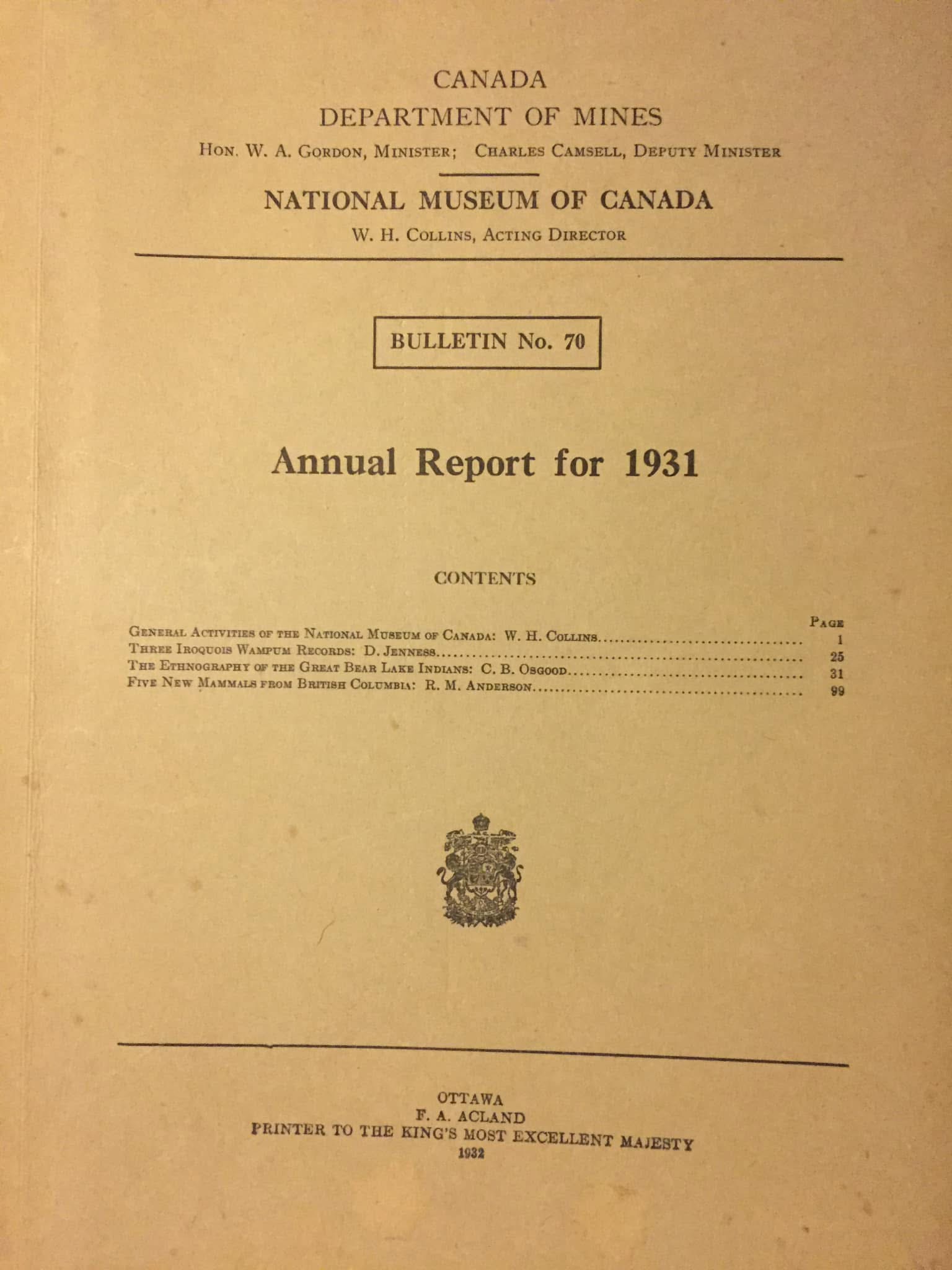
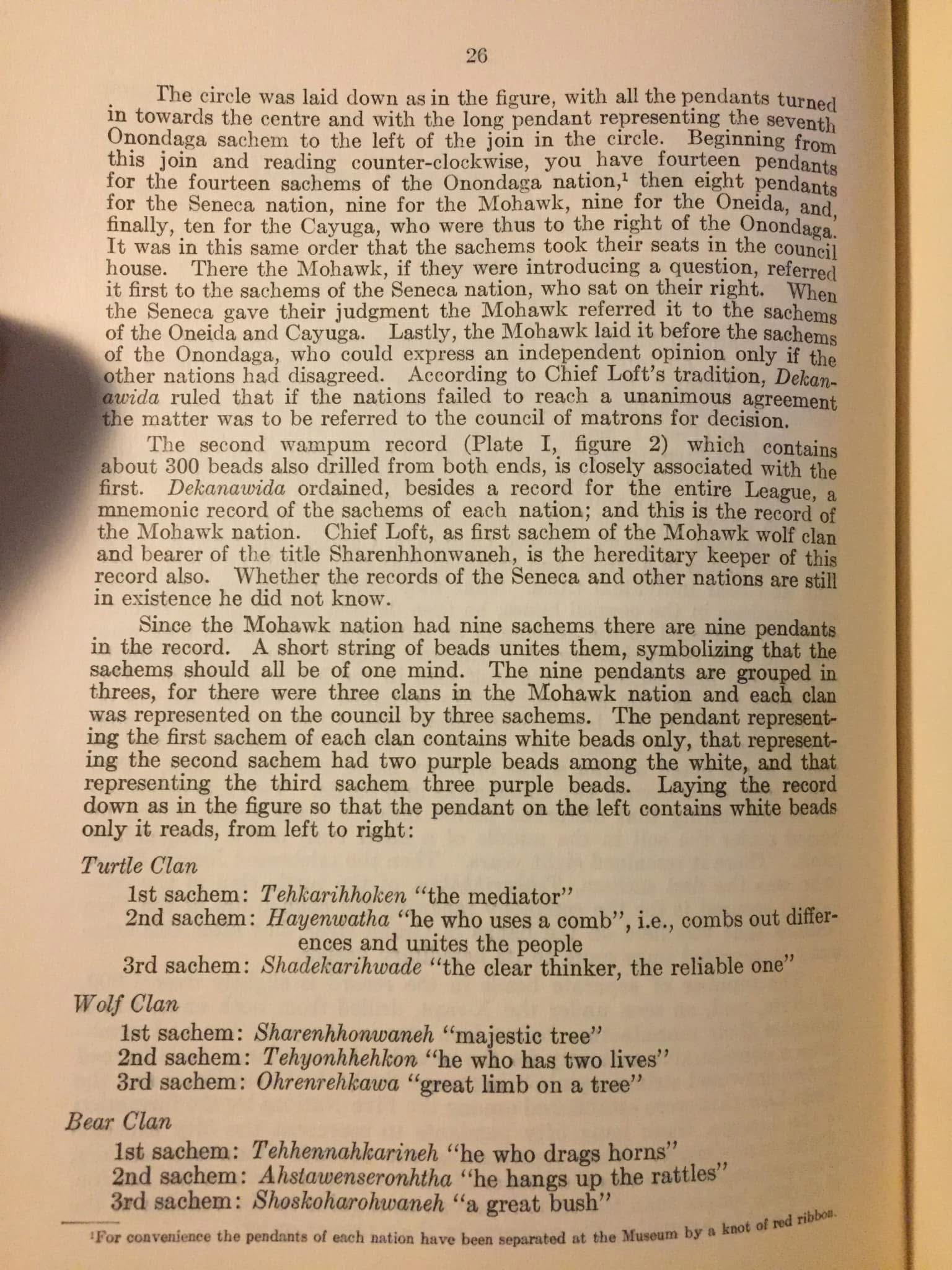
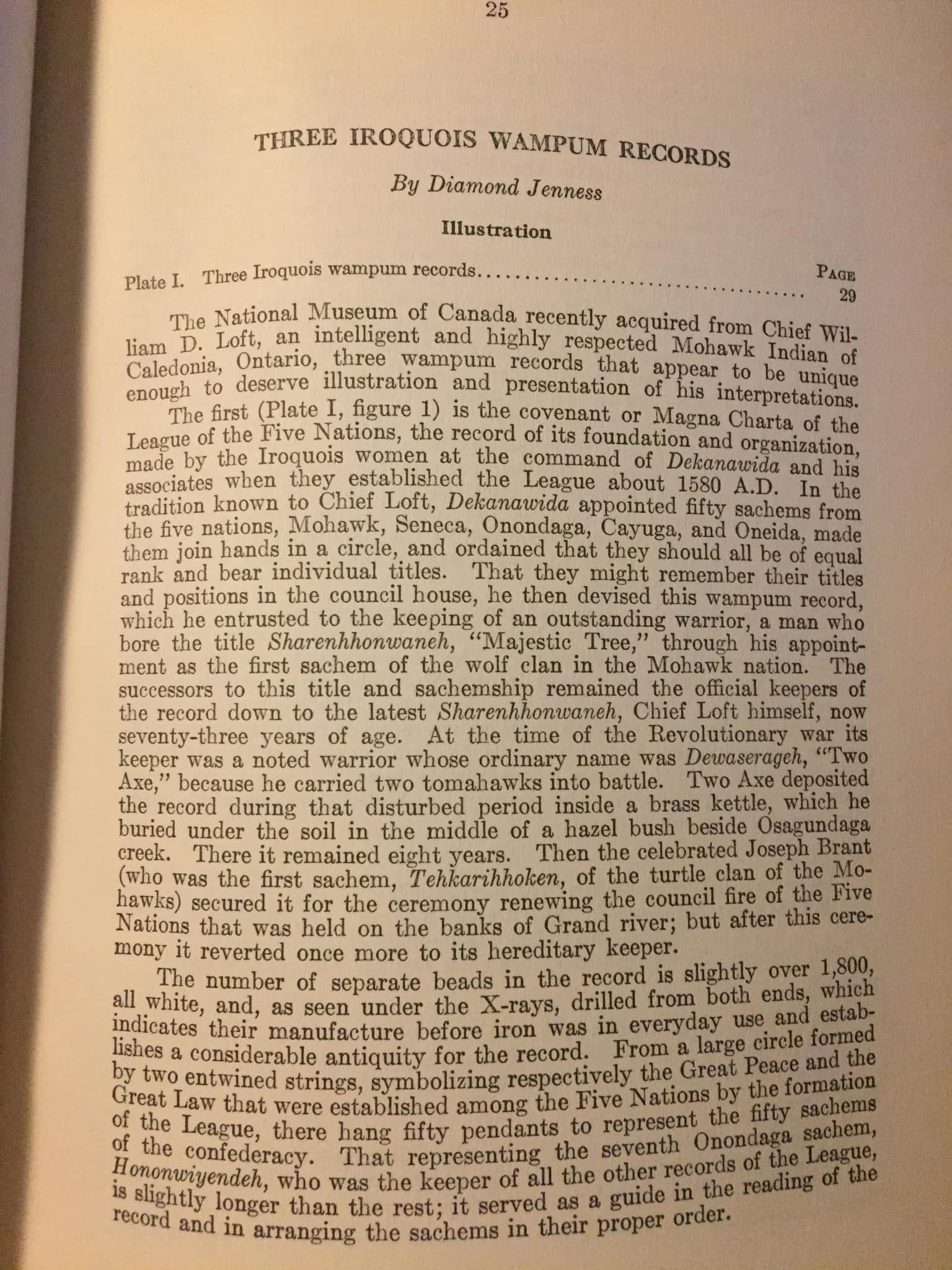
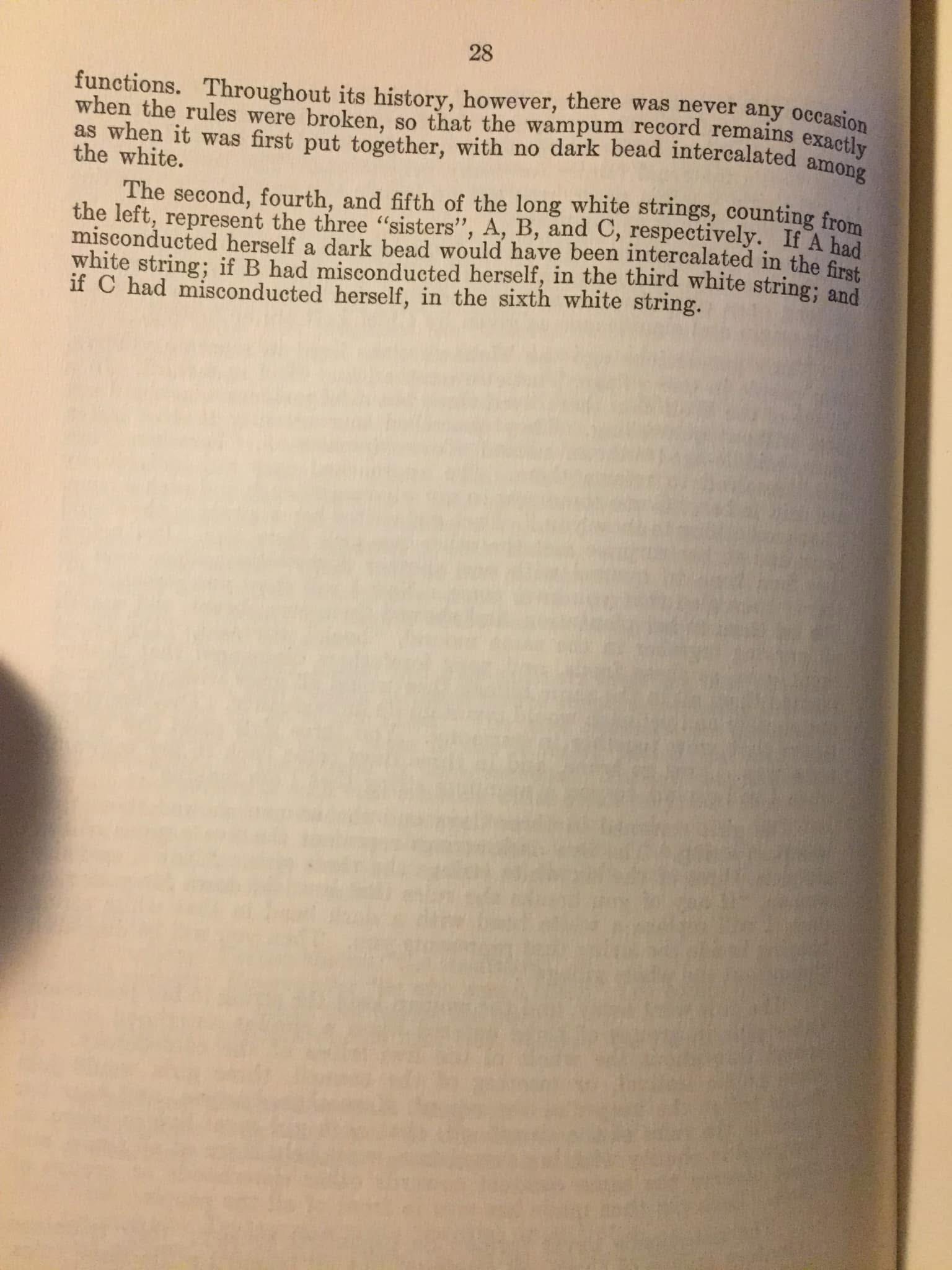
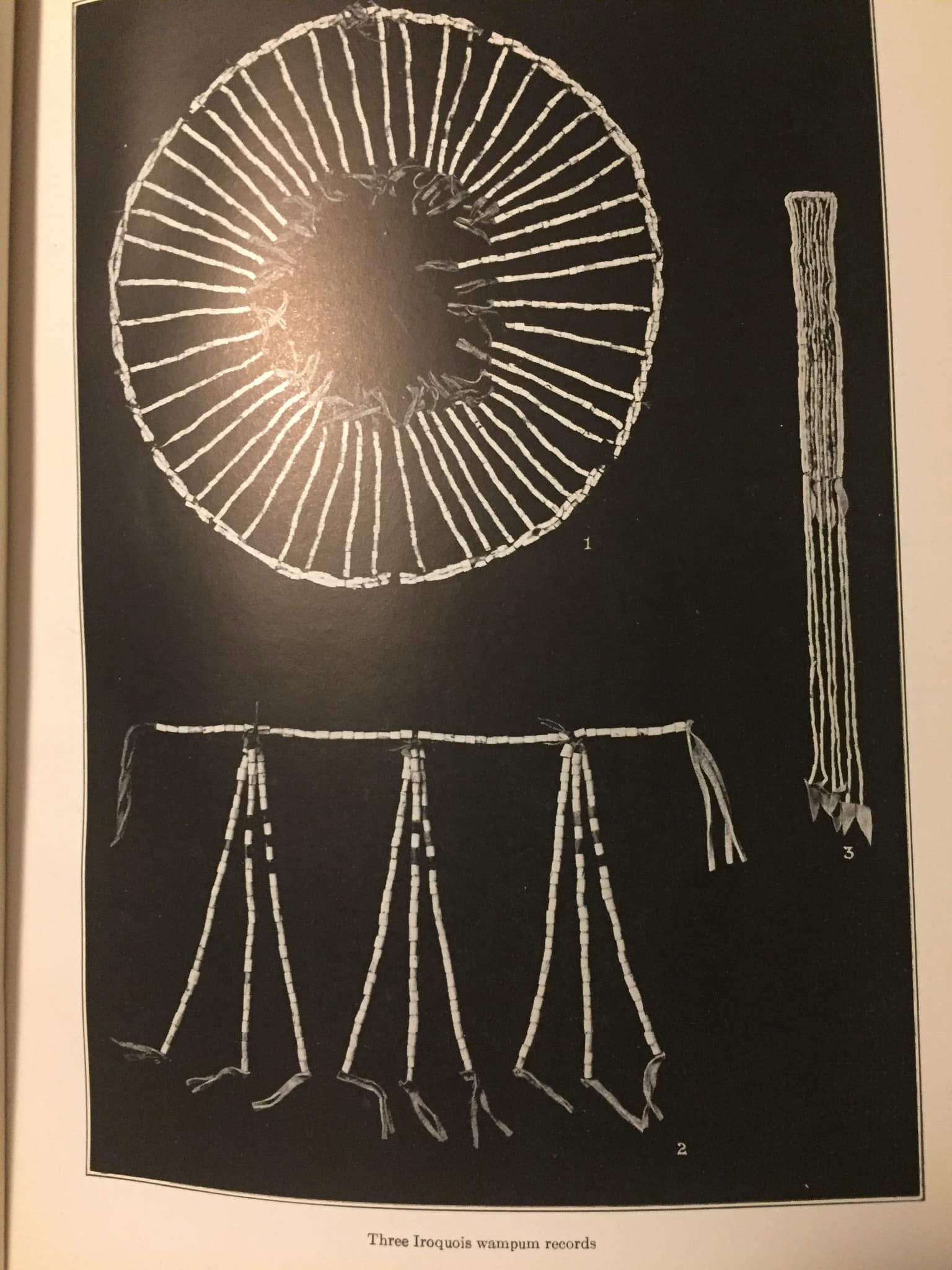
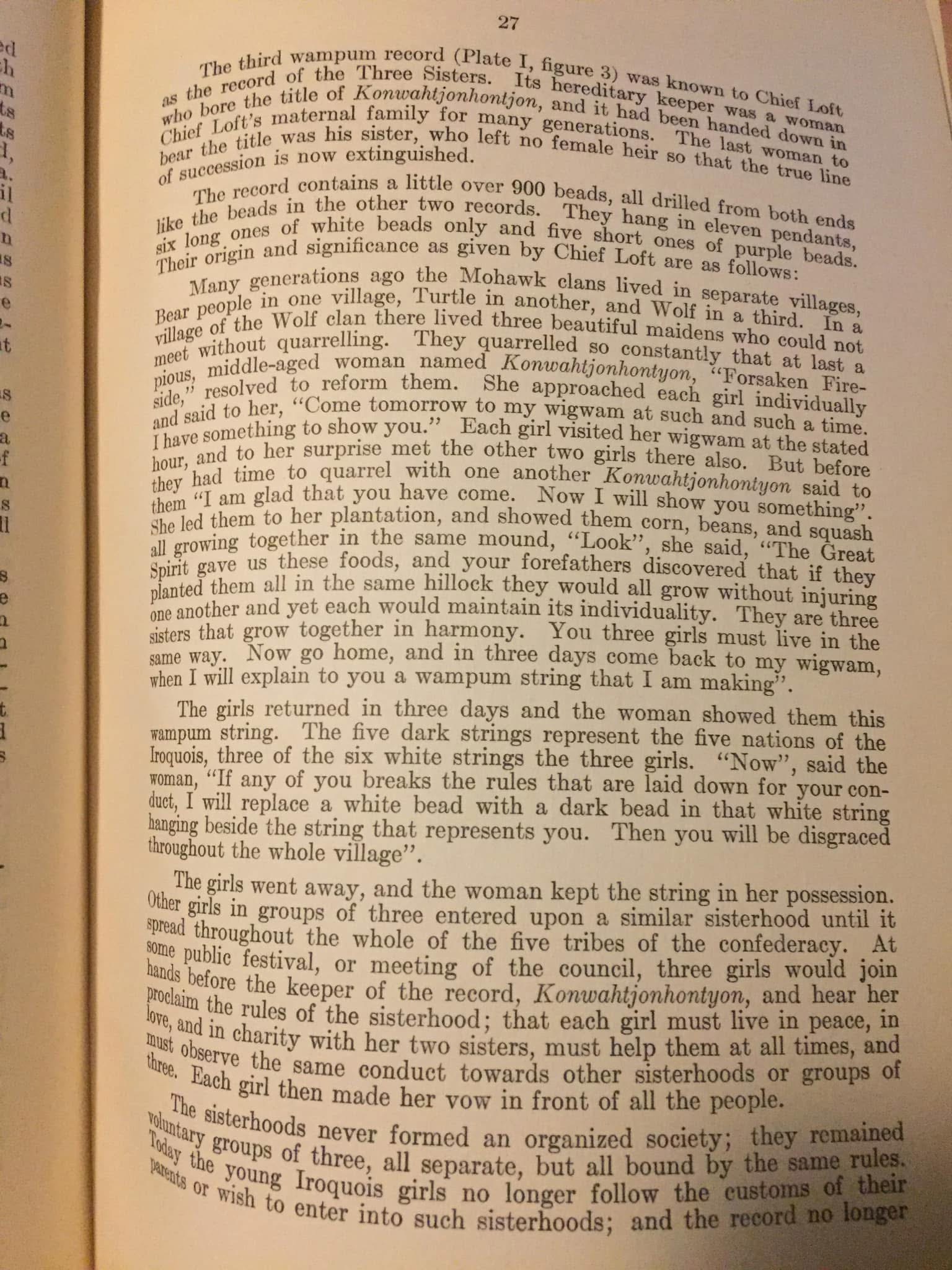
Our documentary record from the Department of Mines / National Museum of Canada bulletin matters here because it shows constitutional wampum records appearing inside Canadian institutional custody in the years after this confrontation over governance and law. That creates a stark contrast: Canada acts as though Longhouse law is extinguishable by statute, while Canadian institutions preserve and publish the very constitutional materials that prove Longhouse law existed, functioned, and endured.
Whether one calls it seizure, removal, or “collection,” the effect is the same in Longhouse terms: the instruments that should remain with the house are taken outward and treated as property of the departing party. Under the principle you describe in Skanawati’s law, that is the opposite of leaving empty-handed.
The Maple Crown and the problem of continuity
Under Longhouse law, when authority enters the Longhouse, the rafters are extended. Authority—spoken of symbolically as horns, antlers, or crown—does not remain the private property of the person who brought it. It becomes part of the house.
In that sense, the adoption and condolence of Crown representatives can be understood as the Maple Crown being placed beneath the rafters of the Mohawk Longhouse. Once placed there, it could not simply be retrieved by walking away.
When Canada imposed its own governance system in 1924, it acted as though it could exit the Longhouse relationship unilaterally. Under Haudenosaunee law, such a departure—especially one accompanied by the removal of records or instruments—violates the rule that one leaves empty-handed.
From that point forward, Canada existed in a state best described not as resolved sovereignty, but as constitutional ambiguity: the Crown relationship had been entered under Indigenous law, but Canada acted as if it could suspend its consequences by statute alone. Put plainly, Canada behaved as though it could keep the benefits of Crown continuity while stripping away the obligations that continuity carried in relation to Mohawk Loyalist posterity.
1924–1982: an unresolved interval
Seen this way, the period between 1924 and 1982 is not simply a story of internal Canadian administration. It is an unresolved interval in which the question of continuity remained unanswered.
When Canada patriated its Constitution in 1982, it did so by reaffirming the continuity of the Crown rather than replacing it. It relied on the same Crown whose relationship with the Mohawks had never been formally resolved.
If the Maple Crown had never been properly removed from the Longhouse, patriation did not end that relationship. It returned Canada to the same continuity it had earlier tried to step away from—without first settling the terms of departure.
The Queen’s answer: continuity reaffirmed
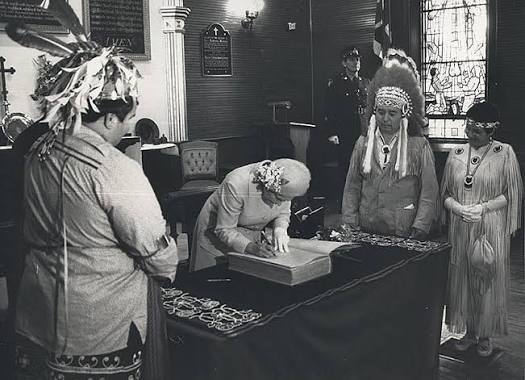
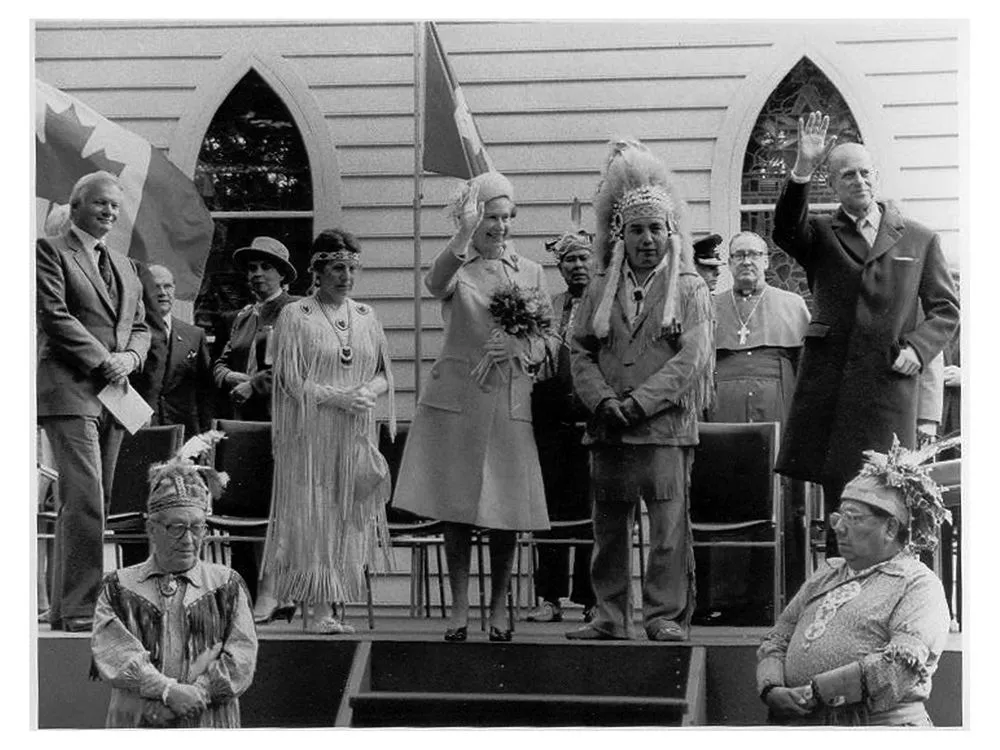
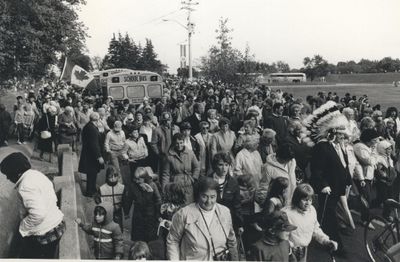
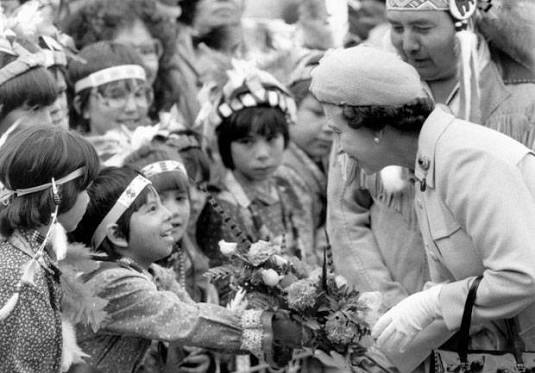
The question of continuity did not remain unanswered by the Crown itself.
After the death of her father, Queen Elizabeth II assumed her role as sovereign at a time when Canada was asserting increasing control over Crown–Indigenous relationships. By the early 1980s, Canada had pressed forward with constitutional changes that placed the Crown more firmly within domestic Canadian structures.
Yet soon after those changes, the Queen appeared at Her Majesty’s Royal Chapel of the Mohawks and unveiled a plaque with notable precision. The wording does not refer broadly to “Indigenous peoples,” nor does it rely on the administrative category “Six Nations.” It speaks specifically to Mohawk Loyalists, and to the land being set aside for them. That distinction matters because it reflects the constitutional peculiarity Canadian officials had earlier acknowledged: Mohawk Loyalist posterity stands on a different footing.
By unveiling the plaque herself, the Queen acted in her own Crown capacity. In effect, she bypassed the need for Canadian mediation and showed the relationship rather than litigating it. Where Canada had attempted to consolidate authority through statute, the Queen reaffirmed continuity through recognition.
This was not a one-time gesture. In 2010, the Queen contributed to completing a communion set for the Mohawks, with an inscription that reconfirmed the continuation of the Crown and the historic alliance. The method is consistent with how monarchy maintains relationships: continuity of symbols, continuity of acknowledgment, and direct recognition.
Seen this way, the Queen’s actions did not contradict Canada; they quietly corrected the record. They reaffirmed an older relationship without requiring Canada’s permission, reinterpretation, or approval.
The simple truth
This story requires memory, not anger.
The Crown crossed the Edge of the Woods. It was invited forward. It was adopted. The circle was changed to receive it. Condolence renewed the relationship. Loyalty affirmed it. When conscription crossed a line, clan mothers corrected the record with wampum—and Canada changed its law. The future king returned, was named, sat at council, and placed Crown symbols and wampum on the same table.
Canada later acted as if none of this mattered. Yet the Crown’s own continuity did not erase the past. It reaffirmed it—quietly, precisely, and in continuity.
Under Haudenosaunee law—and under the logic of continuity that monarchy itself depends on—relationships formed in this way do not dissolve because they are inconvenient. They endure until they are addressed honestly.
That is where the matter still rests.
Footnotes:
- E. Pauline Johnson [Tekahionwake] (1862–1913). A Royal Mohawk Chief. https://fullreads.com/literature/a-royal-mohawk-chief/ [↩]
Leave a Reply