An innocent third-party purchaser or good-faith purchaser is usually defined as someone who buys property without knowledge of hidden defects, disputes, or prior claims affecting the land. In many legal systems, such purchasers are treated as blameless; they rely on the land registry and the visible legal framework, and courts may protect their interests even when an older, unseen right exists.
On Haldimand lands, this idea is more complicated. There are at least three layers to consider:
-
Everyday buyers relying on the registry
Many current homeowners, farmers, and businesses on the Grand River acquired their properties in good faith from people who appeared to have clear title under Ontario’s system. They did not personally design the erasure of the Haldimand Proclamation or the sidelining of Mohawk Loyalist posterity. In the everyday sense, they are “innocent” purchasers. -
Oath-takers and implied constitutional consent
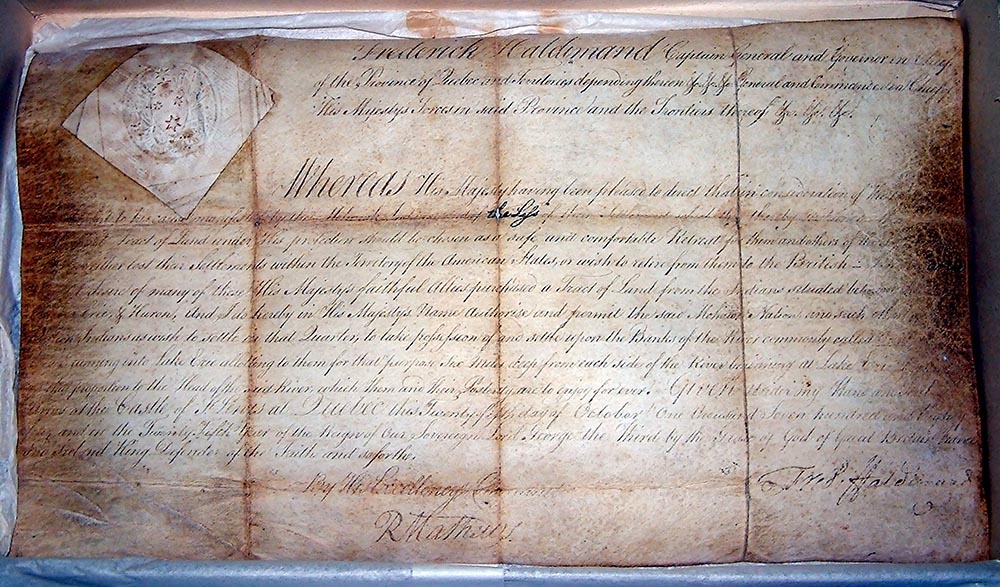
At the same time, Canadian law treats citizenship and oaths of allegiance as more than formalities. When a person naturalizes or swears an oath of office, they are understood to accept the basic constitutional structure of Canada. Courts have held that such an oath is not “forced belief,” but an implied consent to the framework within which Canada operates.In the Six Miles Deep view, once Canada confirmed the Haldimand Proclamation and related instruments as part of that constitutional framework, the oath carries a deeper implication: those who swear allegiance accept a legal duty to respect the Crown’s historic commitments, including the promise of a “safe and comfortable retreat” on the Grand River “for ever.”
Under this logic, a person who has taken the oath and then uses their office, capital, or expertise to acquire, develop, or profit from Haldimand lands as if no such obligation exists is not fully “innocent.” They are operating in breach of a duty imposed by law—failing to observe Crown honour and the special status of Six Miles Deep, even as they benefit from the Canadian system that rests on those very promises.
-
Degrees of innocence and responsibility
This leads to a distinction between everyday ignorance and legal innocence. A recent immigrant who has not yet sworn an oath and buys a small home may stand differently from:-
a naturalized citizen who has sworn allegiance and invests in major developments on the Tract,
-
a professional (lawyer, planner, engineer) who works on Haldimand projects without ever asking what lies beneath the titles, or
-
an official who takes an oath of office, then actively supports policies that ignore Haldimand and expose Mohawk posterity to harm.
The Six Miles Deep framework argues that, once the oath is taken, there is at least constructive notice: people are held to the constitutional commitments that give Canada its legitimacy, including the Haldimand confirmation. Calling all of them “innocent” third-party purchasers erases this duty and normalizes behaviour that, in substance, deepens economic, psychological, and cultural harms to Mohawk Loyalist posterity.
-
In short, the term “innocent third-party purchaser” is not rejected outright, but narrowed. On Six Miles Deep, true innocence is rare. Those who have sworn allegiance or taken oaths of office sit inside a web of obligations that makes it much harder to claim they are simply neutral buyers when they choose to operate, invest, or build on a promised refuge whose existence is part of the very constitutional order they have agreed to uphold.