
|
Getting your Trinity Audio player ready…
|
If you ask most people what makes a nation real, they will point to flags, passports, courts, or armies. They will talk about recognition by other powers or control over stamps, coins, and postal routes. Those things have weight in the world as it is. But standing here on the Grand River territory, in the shoes of someone who carries the blood and the burden of the Mohawk Nation within the Six Nations Confederacy, I see something deeper and more fragile.
A nation is real when its people still hear the mother’s heartbeat in their own language — and choose, every single day, to pass that rhythm on to the children who have not yet been born.
Just last week, on March 31 — National Indigenous Languages Day in Canada — we were reminded once again of this truth. The day calls us to honour the more than 70 Indigenous languages still spoken across these lands, including our own Kanien’kéha. It is a moment to celebrate resilience, but also to confront the ache of what was nearly lost and to recommit to what we are bringing back.
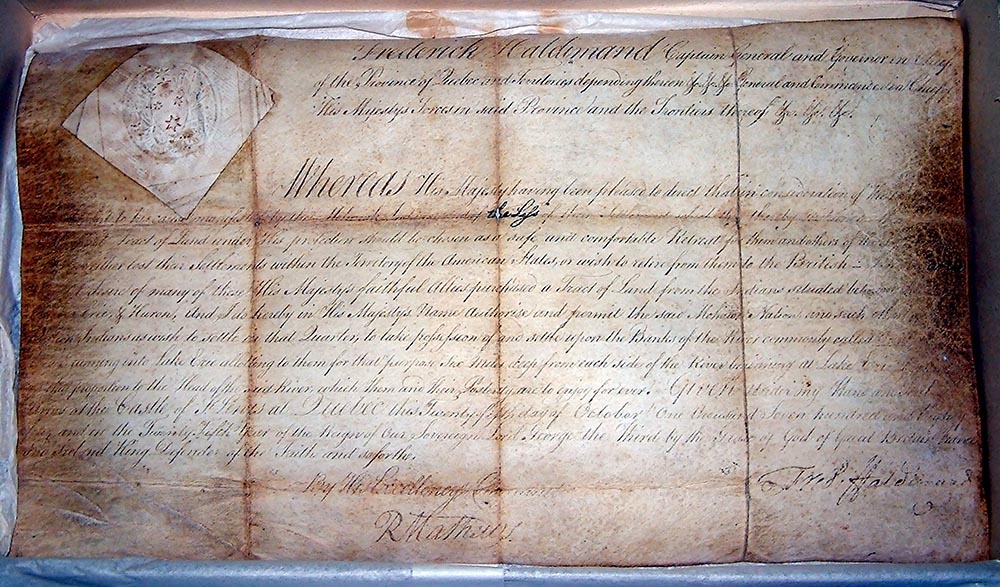
We forgot much of it. Residential schools, assimilation policies, and the constant pressure of English tried to silence Kanien’kéha until it became a whisper even in many of our own homes. The language that once shaped how our ancestors greeted the morning, resolved disputes in council, gave thanks for the waters and the corn, and taught us to see the land as a living relative — that language became endangered on the very territory the Haldimand Proclamation of 1784 set apart for us and our posterity “forever.”
When we forget the language, we begin to forget how to hear the drum of Mother Earth herself. The words are not decoration. In Kanien’kéha, the grammar itself pulls us toward relationship and responsibility rather than ownership and extraction. Verbs carry the ongoing action of life. To speak of the river or the forest is to speak of relatives, not resources. Lose the language and the bundles of knowledge tied to it start to fray — the protocols of the Great Law of Peace, the Seventh Generation thinking, the reciprocal duties to the land that sustained us for centuries before any European set foot here.
Yet here is the truth that gives me hope and purpose: we have not surrendered to that forgetting. Onkwawenna Kentyohkwa — Our Language Society — has been running full-time adult immersion since 1999, creating highly proficient second-language speakers who are now raising children in Kanien’kéha and teaching others. The Six Nations Language Commission supports multiple immersion efforts. Graduates of these programs are stepping into schools, longhouses, and community work. Land-based initiatives are deliberately pairing language learning with stewardship — planting ancestral seeds, restoring wetlands, harvesting medicines — so that the words and the land speak to each other again. The Community Plan names the preservation and enhancement of Haudenosaunee languages as a core pillar, right alongside Mother Earth care and self-determination.
This is not nostalgia. This is nation-building at the deepest level.
The Kaianere’kó:wa — the Great Law of Peace — was never meant to be a dusty oral relic. It is a living constitution brought by the Peacemaker, encoded in wampum, ceremony, and language. It teaches consensus (“one mind”), the accountability of leaders (especially through Clan Mothers), and the duty to consider impacts seven generations forward. When we conduct ourselves according to these principles — whether in longhouse governance, community planning, or decisions about the territory — we are not performing culture. We are exercising sovereignty in its most authentic form. The language carries the precision and the spirit needed to keep that law alive without distortion.
The Haldimand Proclamation and the massive litigation heading to trial in October 2026 are important. They address accounting, mismanagement, and the Crown’s obligations on hundreds of thousands of acres that were to be ours forever. But even if every acre were restored tomorrow, without the mother’s heartbeat beating strongly in our homes, councils, and ceremonies, we would still risk becoming a people who own land but no longer truly inhabit it as Haudenosaunee.
A nation is not real because outsiders finally acknowledge a claim. It is real when its children introduce themselves by clan in their own language, when thanksgiving flows naturally from the tongue during the Ohén:ton Karihwatékwen, when decisions in council seek the good mind rather than quick majorities, and when stewardship of the Grand River corridor feels like caring for family instead of managing property.
We are in the middle of that reclamation right now. Adult learners become fluent speakers. Fluent speakers become parents who raise first-language children. Those children grow up understanding their responsibilities to the land, to the Confederacy, and to the coming faces. The drum is growing louder again — not because someone granted us permission, but because enough of us decided the forgetting stops here.
If I had one chance to speak this plainly to our own people and to anyone listening: do not wait for the perfect legal outcome, the full land return, or external validation before you act. Start where the heartbeat is weakest — in the homes, in the language nests, in the everyday choice to greet the day in Kanien’kéha, to thank the waters in the original words, to teach the young ones the relational way of seeing the world.
Support the immersion programs. Bring language into land-based learning. Use it in governance. Let it shape how we plan our communities and how we relate to one another. Because when the mother’s heartbeat is strong again, the rest follows more naturally: clearer exercise of the Great Law, stronger stewardship of Etino̲haˀ Ohwęjadeˀ (Mother Earth), and a nation that does not merely argue for its existence but lives inside its original rhythm.
We did not create this nation with ink on paper. We received it through original instructions carried in language, ceremony, kinship, and responsibility to the land. The forgetting was forced upon us, but the remembering is our choice.
Every new speaker, every ceremony spoken with deeper understanding, every child who feels the drum of the earth through our mother tongue — these are the true markers of a nation that refuses to die.
The language is coming home, one fluent voice at a time, one thankful word at a time, one child raised in the original rhythm at a time. On the Grand River, the mother’s heartbeat is growing stronger. The drum is sounding clearer. The Great Law still guides us. The territory still calls to us. And we are answering — not with arguments alone, but with lives lived in the language that binds us to each other and to the living earth. Every immersion graduate, every land-based lesson, every home where Kanien’kéha is spoken becomes another beat in that enduring rhythm.
Nya:wen. Let us keep listening. Let us keep speaking. And let us keep walking the original path until the heartbeat of our nation once again becomes the natural pulse of every day on this territory and beyond.
Leave a Reply